BORISACKET
Four hundred fans
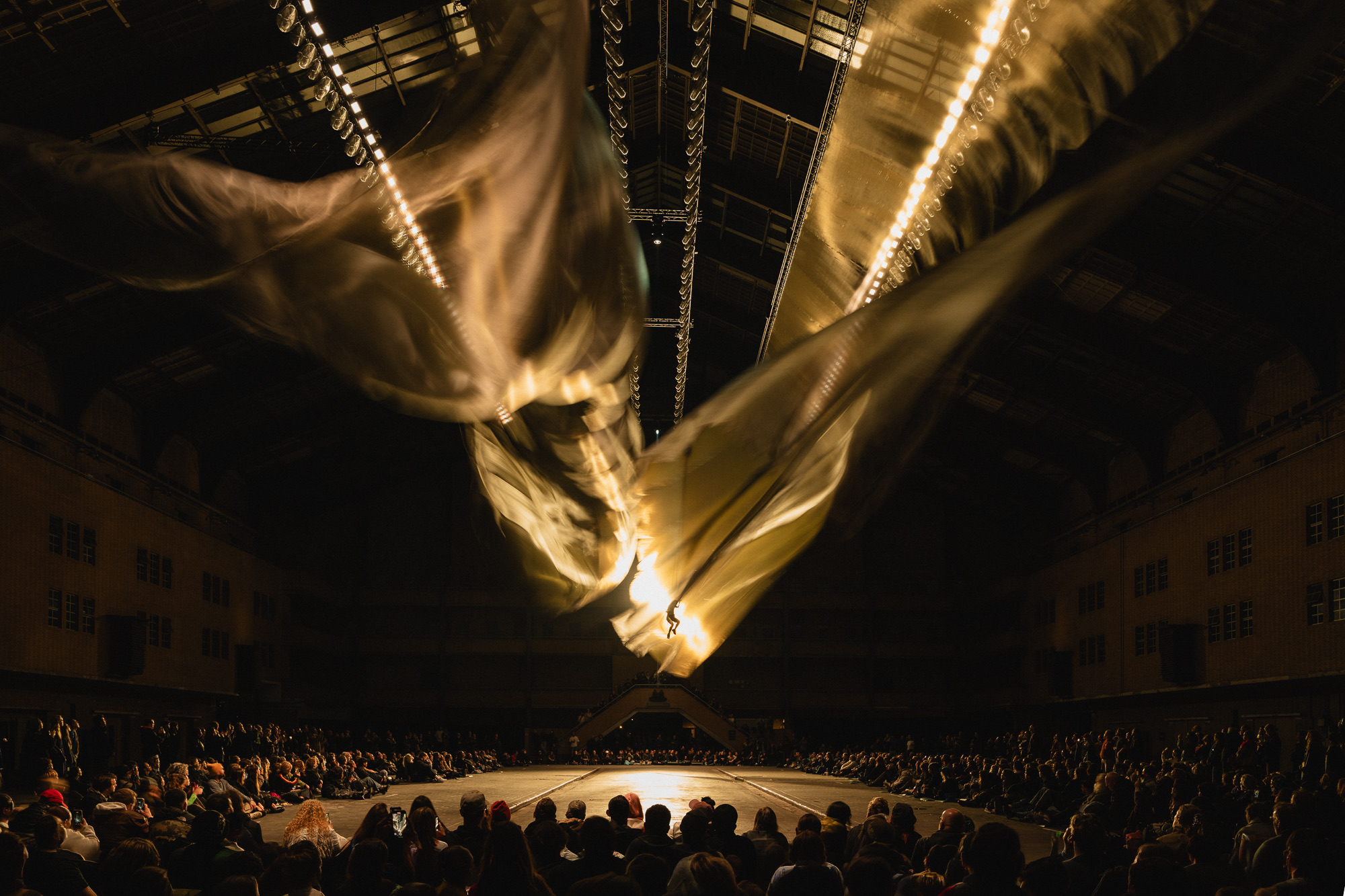
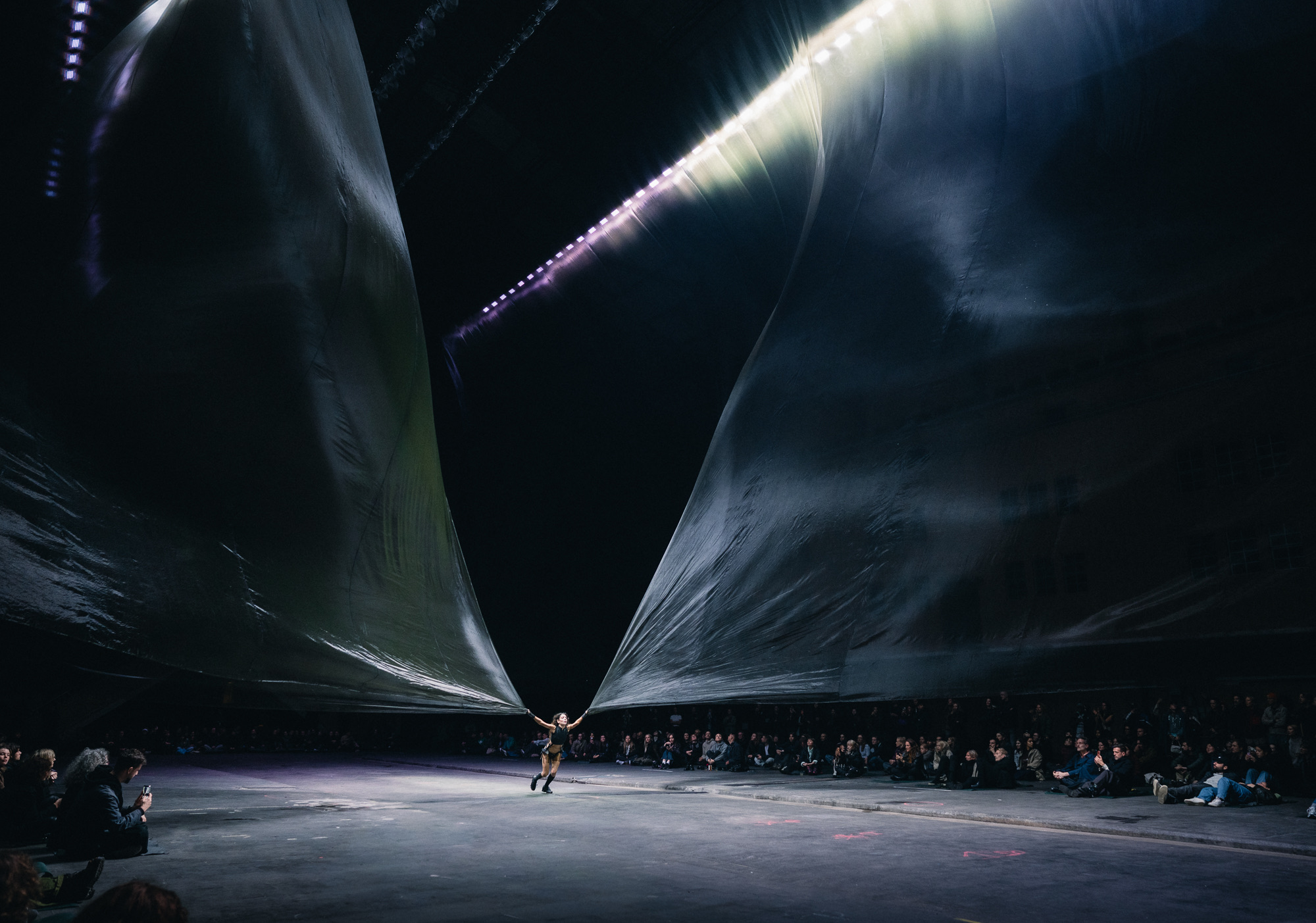
For Einder, Boris Acket and his team set two curtains in motion inside Amsterdam’s Centrale Markthal. Five years earlier, they had worked with a single sheet of fabric to recreate the movement of long grass that musician Elias Mazian pictured when he listened to his record.
Inside the Markthal
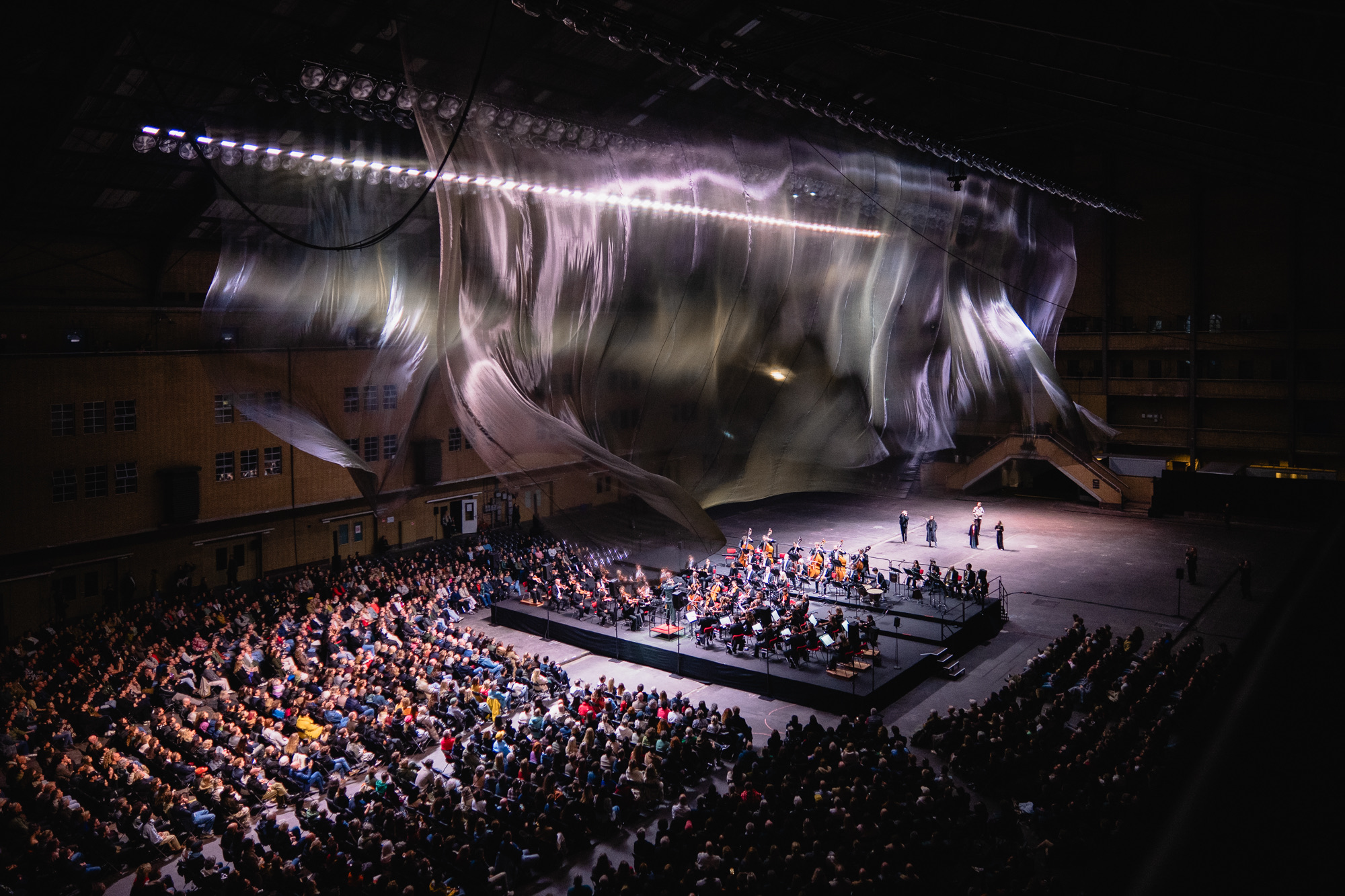
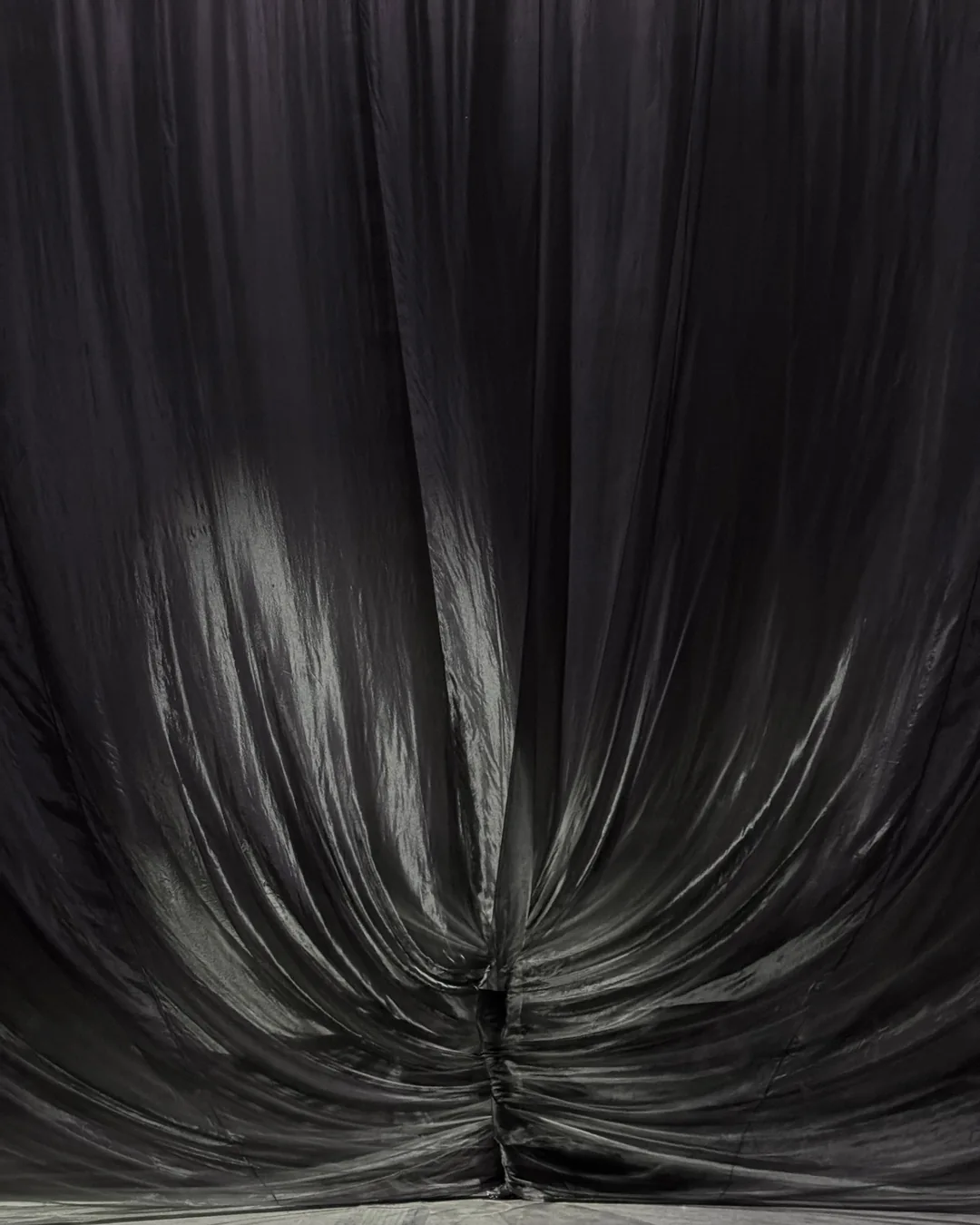
Even opening a door could leave a ripple in the cloth. Timo Pisart put the fabric’s weight at nineteen grams per square metre. The installation stretched some eighty metres along the hall and stood twenty-five metres high.
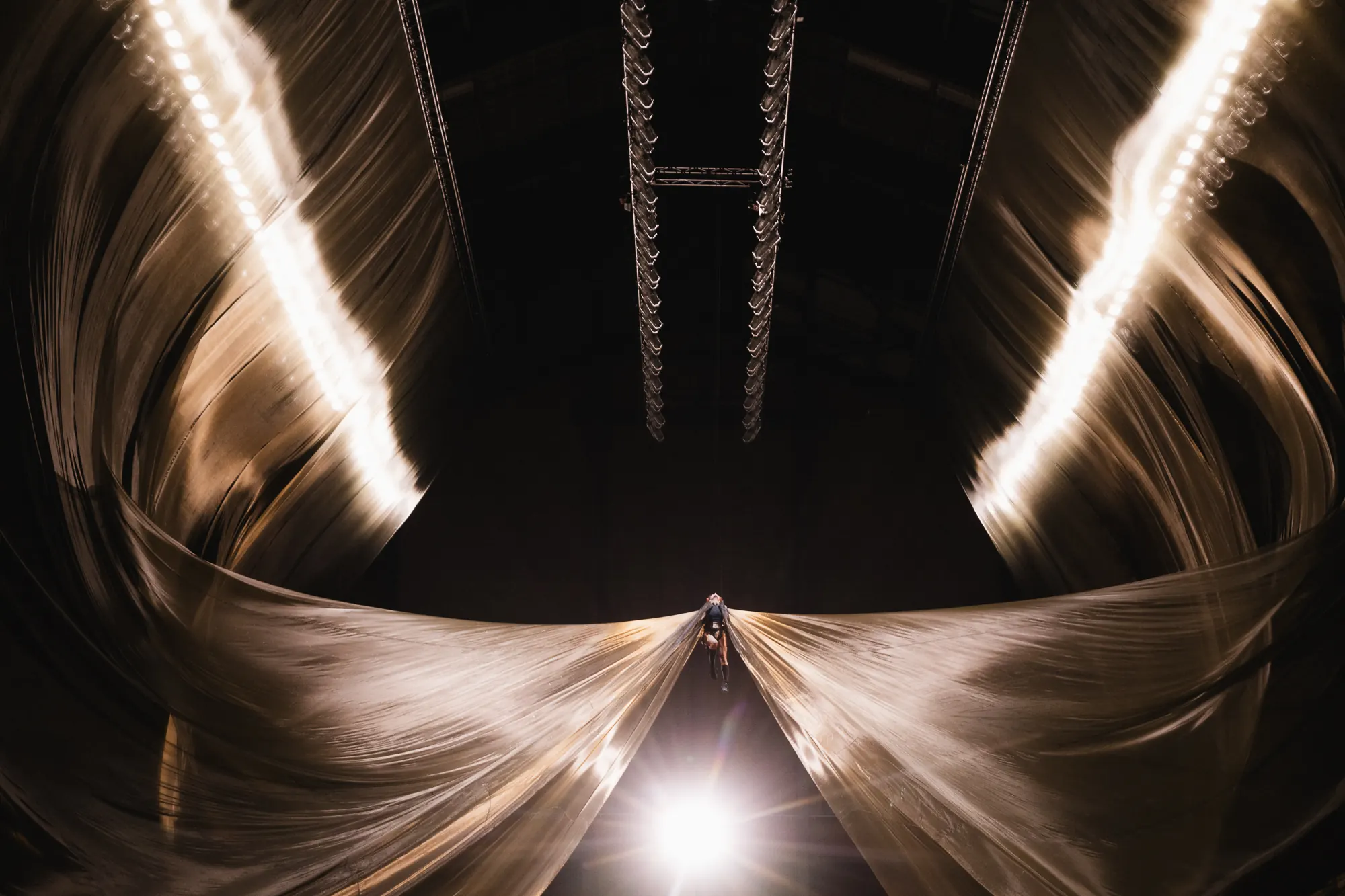
Einder is a Dutch word for the horizon. For the thirtieth anniversary of Amsterdam Dance Event in October 2026, Acket’s studio hung two curtains in the old market hall and gave each its own bank of fans. The team could control the banks separately, though a fan blowing towards one curtain could set the other moving too. At times the edges lined up and the two sheets seemed to form a single horizon.
Acket wanted to know how a dancer might change what people saw in the cloth. On 23 and 24 October, Kianí del Valle danced a solo she had choreographed for Einder, beginning on the floor before she was lifted into the air.
The film could not be played. Please reload the page and try again.
The first cloth
Acket asked Mazian, an old friend, what he saw when he closed his eyes and listened to his 2020 album Vrij van Dromen. He pictured water and long grass moving in the wind. The two began looking for a way to bring that movement on stage. At Het HEM, a former munitions factory in Zaandam, they had ten days to try it out.
Acket first considered a lenticular fabric, but it was too expensive. He found a knitted screen cloth that split the light passing through it and caught direct sunlight much like water. The team dropped a planned projection. At the opening concerts in August 2021, eighteen motors and two quiet fans moved a single sheet measuring fourteen metres by five. As it turned, the light on it shifted.
The cloth had very little give. Lumus Instruments built the mechanisms that pulled it back and forth, but if two neighbouring motors pulled too far apart, the fabric could tear. “We had a failsafe using magnets, to make sure the fabric won’t rip,” Acket told Derivative. He also wrote software to limit how far each motor could pull, based on the slack between it and its neighbour. Even when the team repeated a sequence, the cloth made a slightly different wave. Lumus Instruments describes this as “the constant friction between control and surrender”.
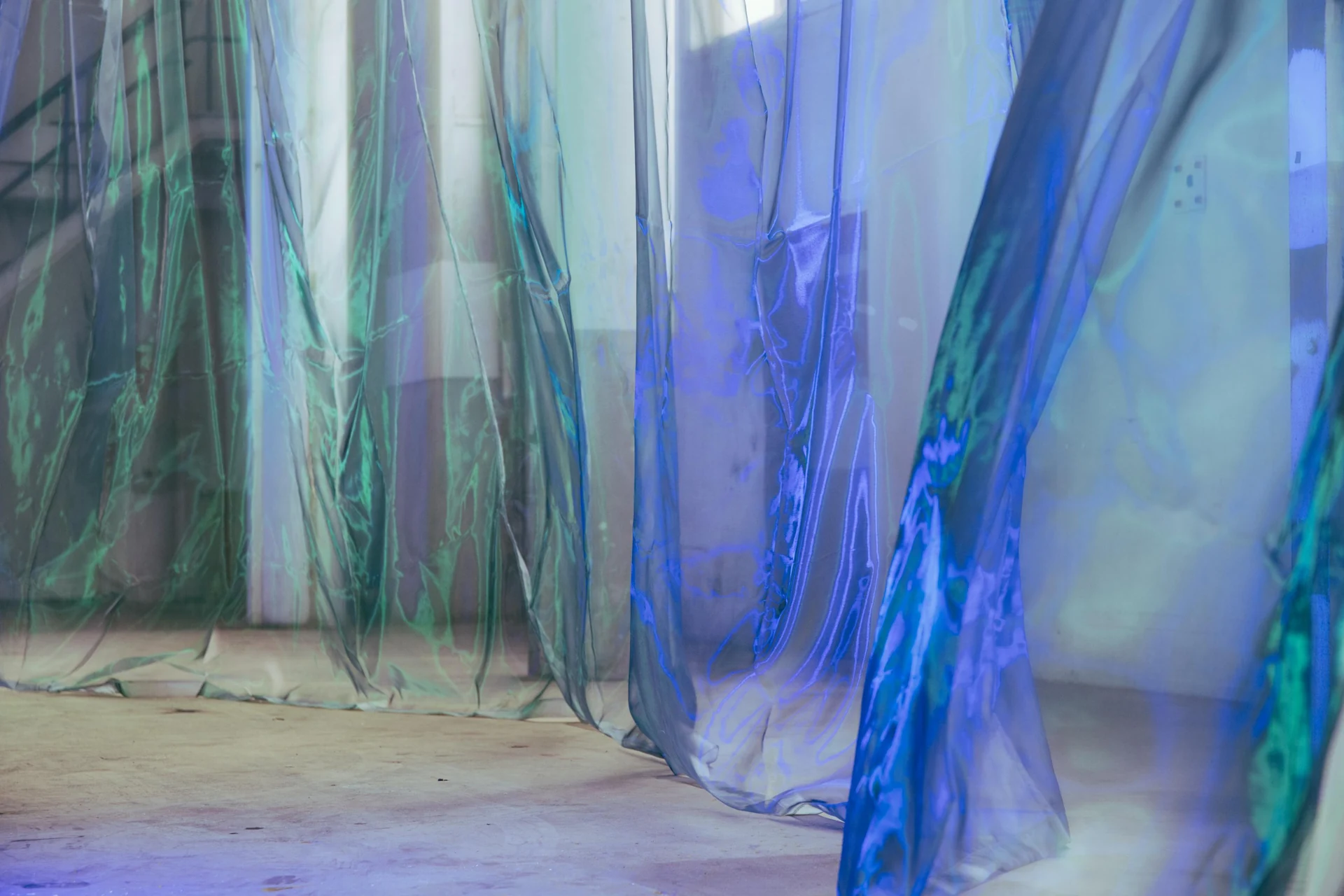
“We had a failsafe using magnets, to make sure the fabric won’t rip.”
Inventing weather
In 2024, the team brought a storm indoors. In the Berlin version, Hydrosfeer, software simulated three storm cells passing overhead. Visitors could lie beneath the fabric and hear weather sounds by the Berlin studio KlingKlangKlong alongside field recordings by acoustic ecologist Gordon Hempton.
In Amsterdam, the wall text described a “subjective weather algorithm”. At times, the software set the fans to follow an imagined wind direction. The temperature in the hall could also affect how the cloth moved. Djrum wrote the soundscape for the exhibition.
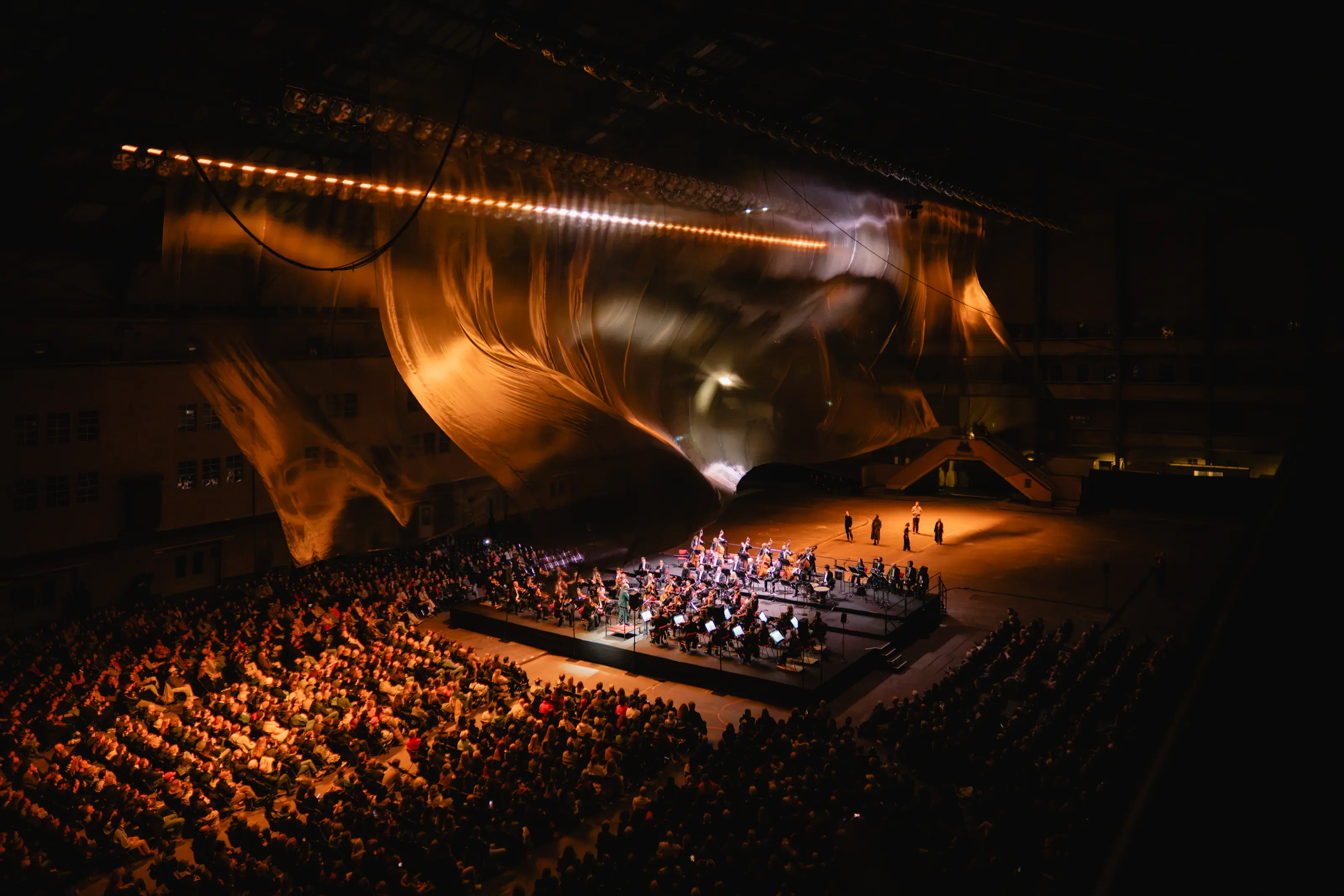
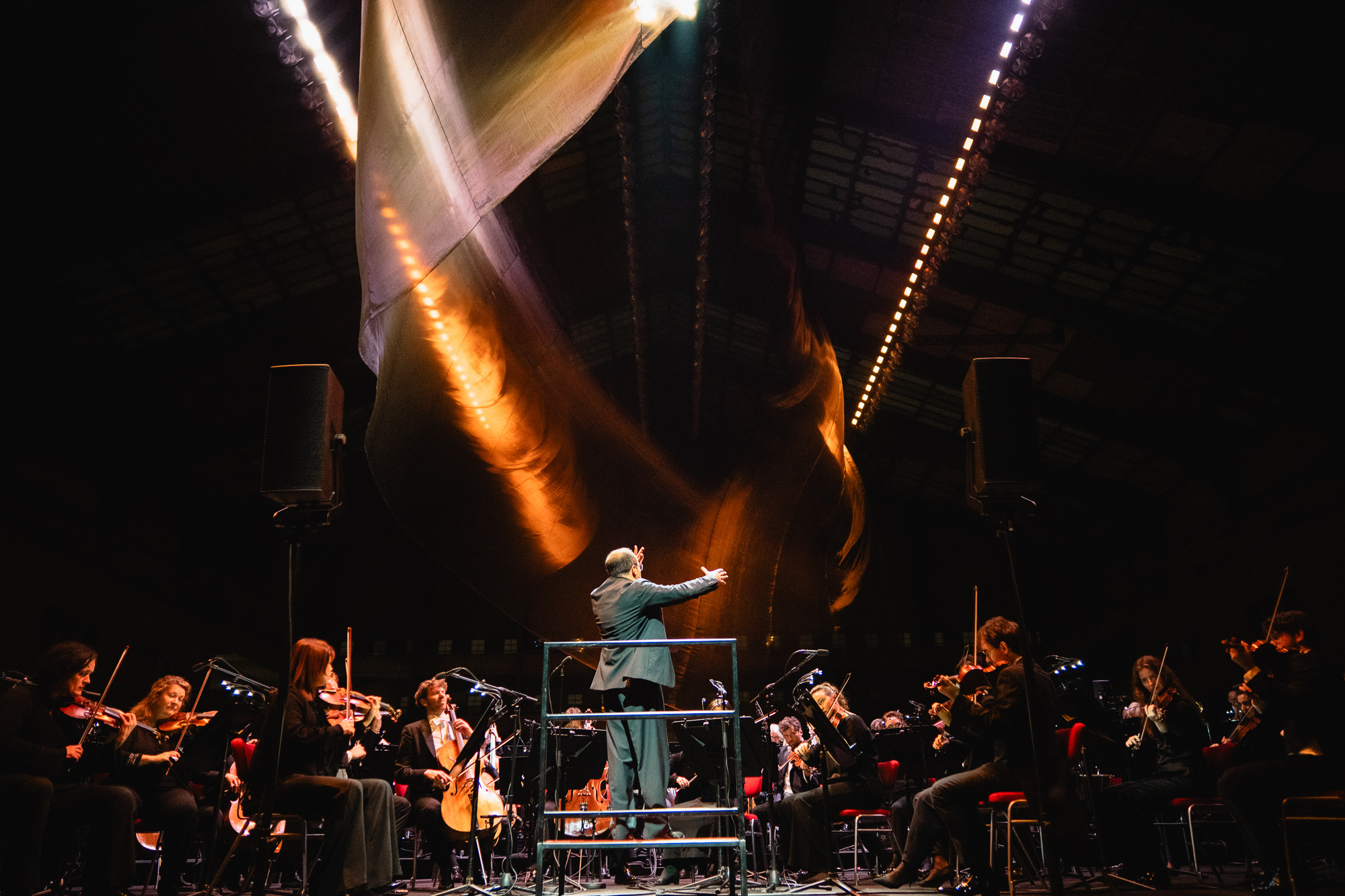
The musicians played about a third of the way along the cloth. From the audience, you could see the curtains continue behind them. On opening night, 21 October, Riccardo Minasi conducted the Royal Concertgebouw Orchestra in Beethoven’s Fifth Symphony beneath the moving curtains. The evening closed with music Acket had written for the occasion. Mazian and his band played the following night.
The film could not be played. Please reload the page and try again.
In perspective
At the Markthal, you could see what the team had gained by dropping the projection. A band of light widened as the cloth turned. Even once you understood how the effect worked, there was pleasure in guessing which way the next fold would go.
Pisart noticed Djrum scraping a small stone across a paving slab during his set. A gesture you could easily miss in a hall that size filled the room with sound. Del Valle began her solo coiled in the curtain. Later, as she turned in the air, the music made the movement feel light. You could still see the effort it took to hold that shape against the cloth.
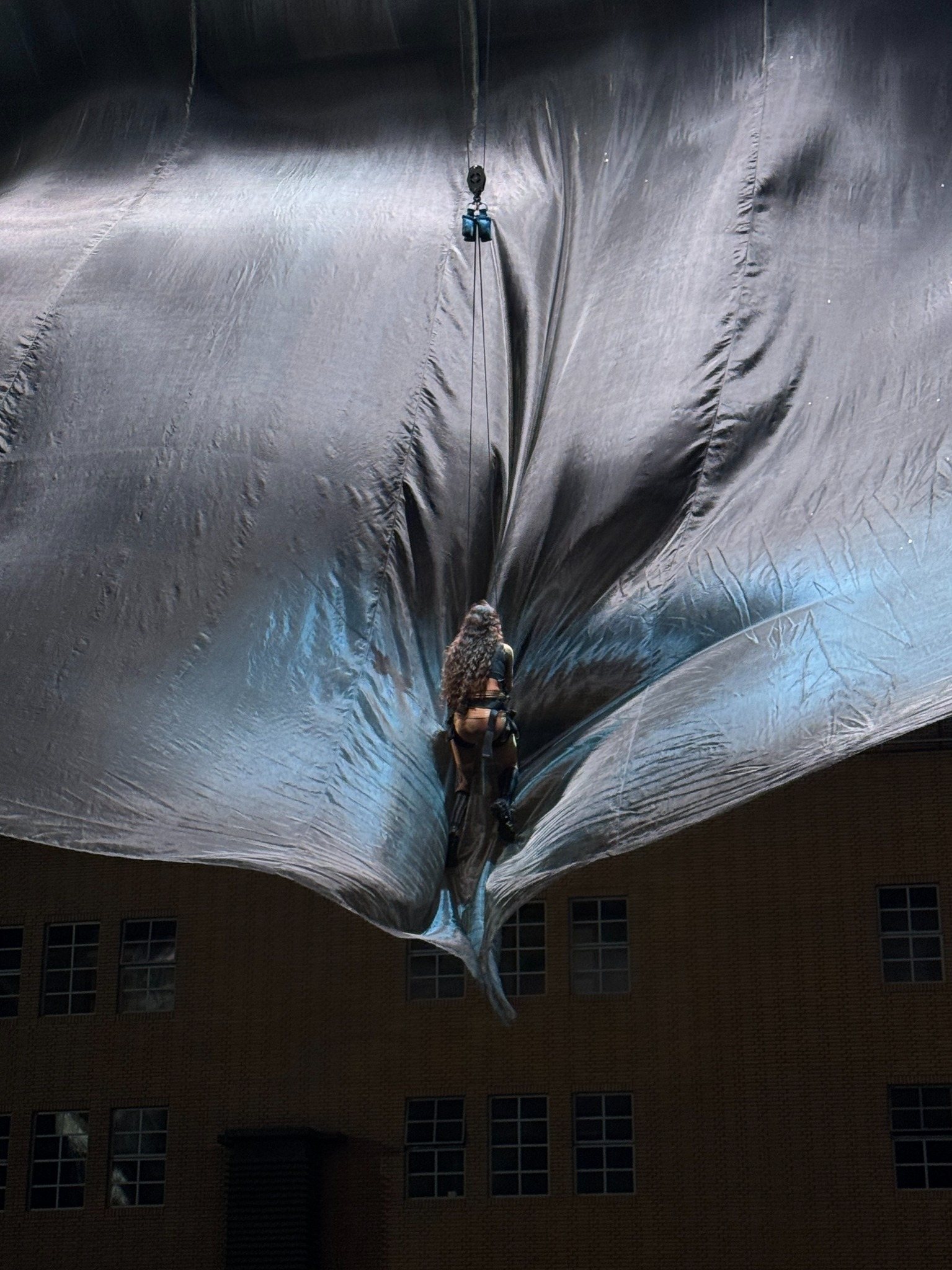
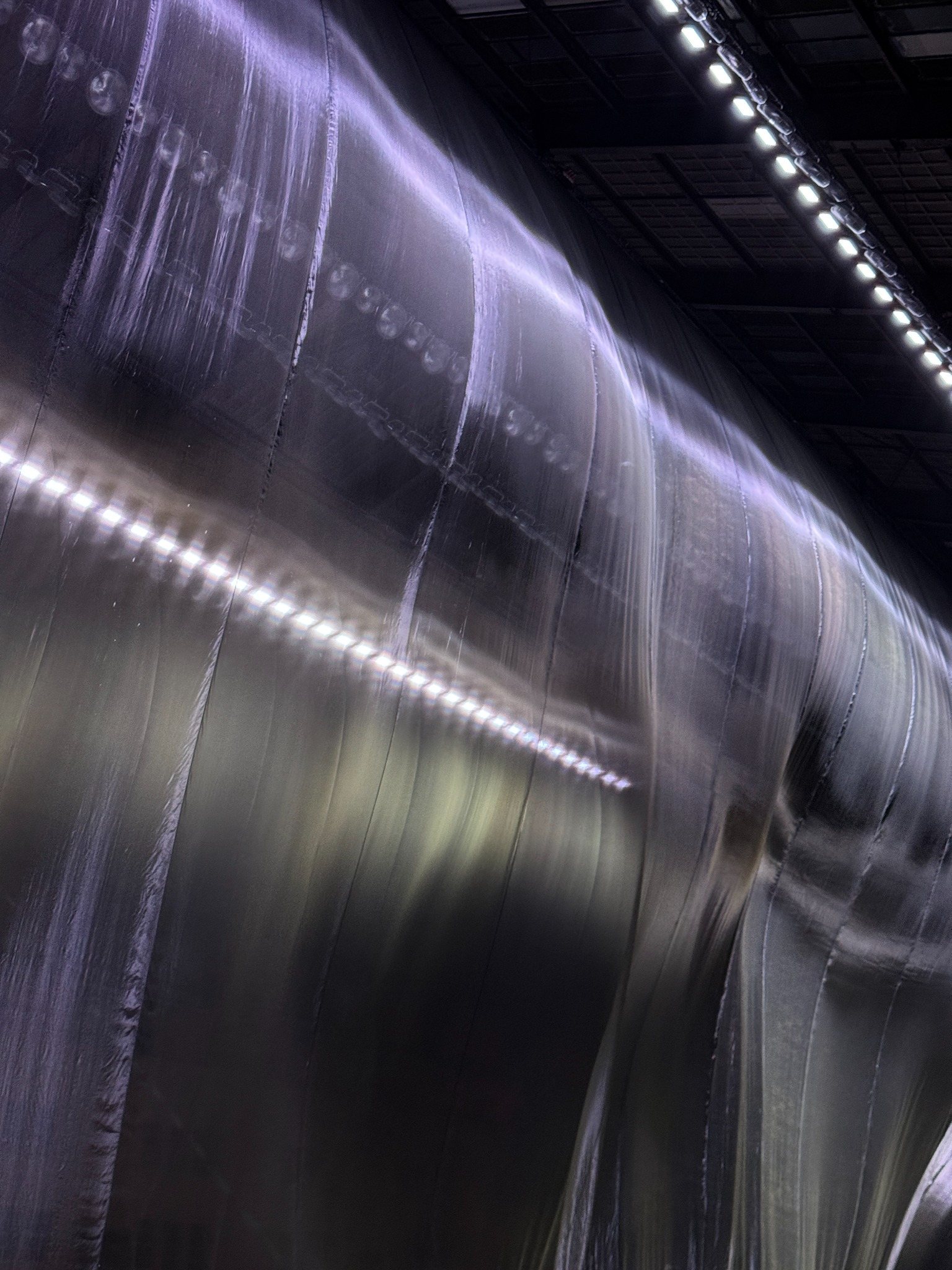
Del Valle’s ascent showed how high the Markthal was. Its length mattered just as much. You could watch a ripple travel along one curtain and fade, then see the other begin to move. It was easy to see why Mazian had pictured long grass. A slight change in the wind could change the view all the way down the hall.
Credits
Centrale Markthal, Amsterdam, 2026
- Artwork
- Studio Boris Acket
- Presentation
- Studio Boris Acket, Making Waves, Goonie Crew
- Production partner
- Goonie Crew
- Choreography and solo performance, 23 and 24 October
- Kianí del Valle
- Exhibition soundscape
- Djrum (Felix Manuel)
- Exhibition support
- Anthropic
- Closing photographs
- Carl Barenbrug
Het HEM, Zaandam, 2021
- Original collaboration
- Elias Mazian, Boris Acket
- Producer
- Anton Pieete
- Kinetic mechanisms
- Lumus Instruments
- Visual collaboration
- Toon Rooijmans
- Fabric collaboration
- Levtec
Sources
| Source | Title |
|---|---|
| Derivative | The making of Einder |
| SNCMAG | Interview with Boris Acket |
| Het HEM | Einder opening concerts |
| Studio Boris Acket | Einder – Hydrosfeer |
| Einder | The Amsterdam installation |
| 3voor12 | Timo Pisart on Djrum and Einder |
| Einder | Kianí del Valle at the Centrale Markthal |
| Einder | Amsterdam production partners |
| 3voor12 | Boris Acket’s EINDER: gecontroleerde chaos |
| Lumus Instruments | EINDER | Storm sequence at LOST Berlin |