Stonehenge
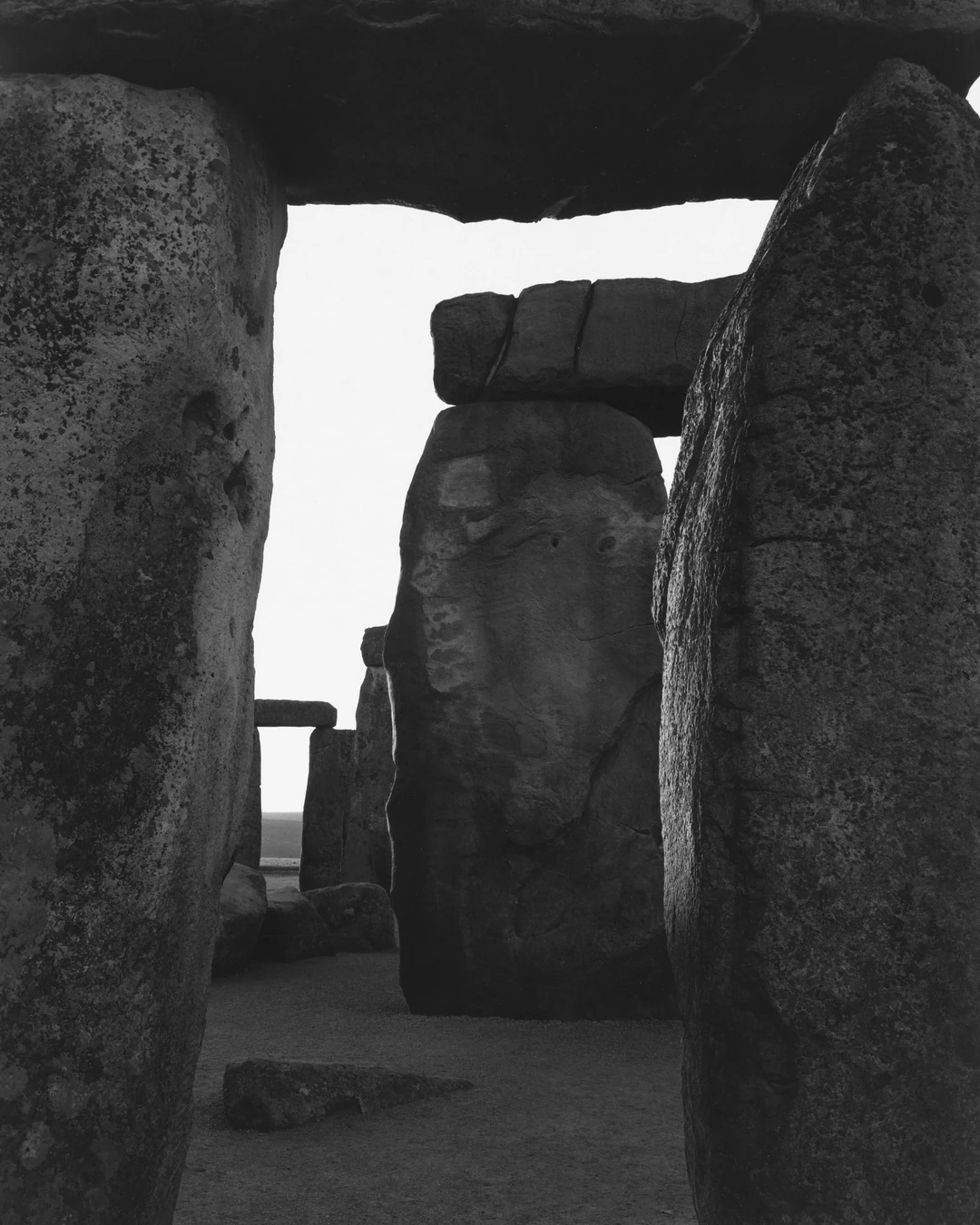
The straightened edge of Stone 56 once framed the winter-solstice sunset with its neighbouring upright. Someone shaped tonnes of stone to give an event on the horizon a particular frame.
That care extended to the surfaces and connections. Working the sarsens exposed their pale interiors, with particular attention paid to faces seen from the north-east approach and within the monument. Projections on the uprights fitted sockets in the lintels; neighbouring lintels joined with tongues and grooves. The familiar silhouette contains decisions as specific as those in a piece of furniture.
Stonehenge brings together weight, light, and the movement of people. We can identify its sightlines without knowing who was allowed to follow them. The works gathered here return to those relationships: framing a landscape, marking time, inviting play, or making a massive object move.
Nancy Holt: Sun Tunnels
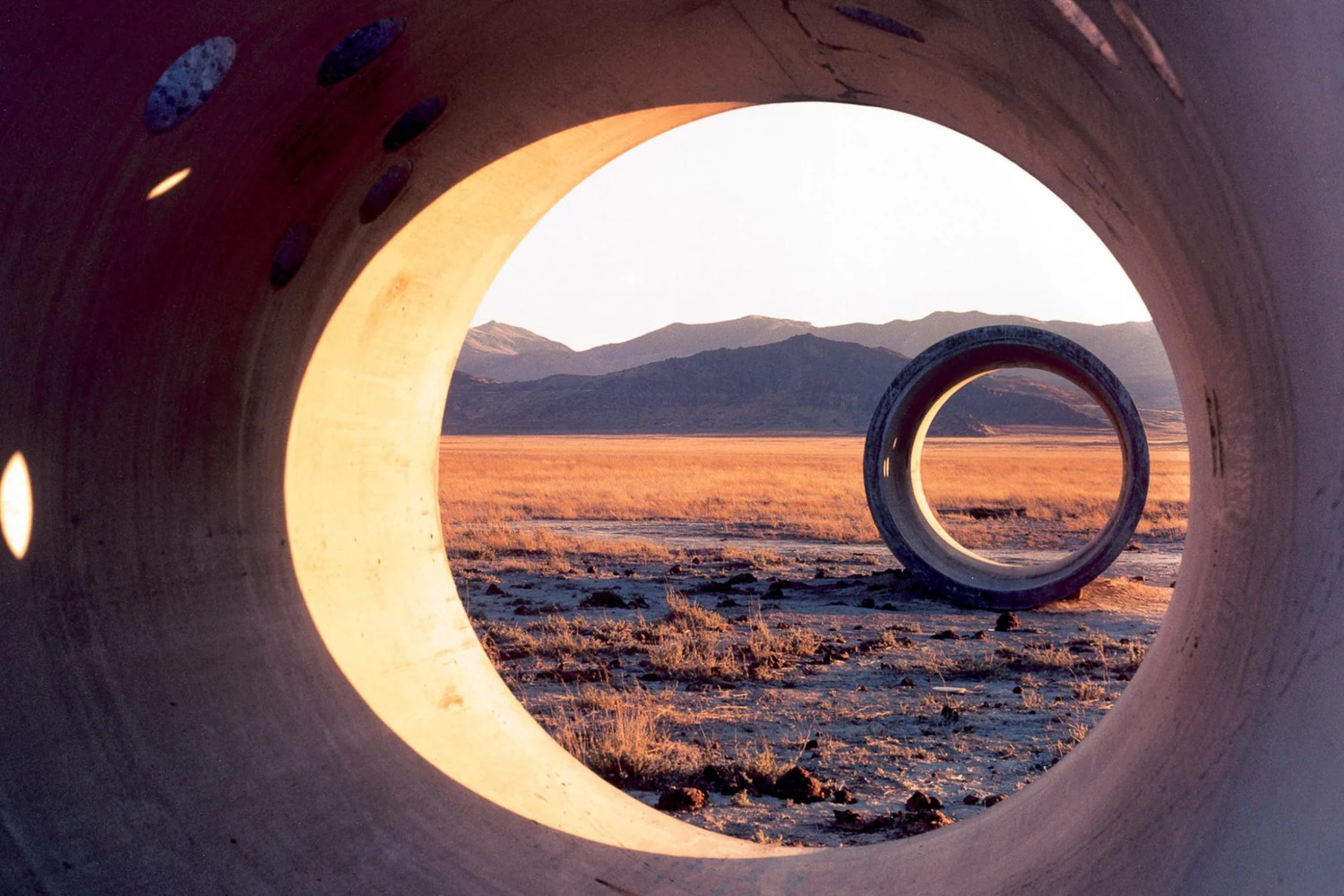
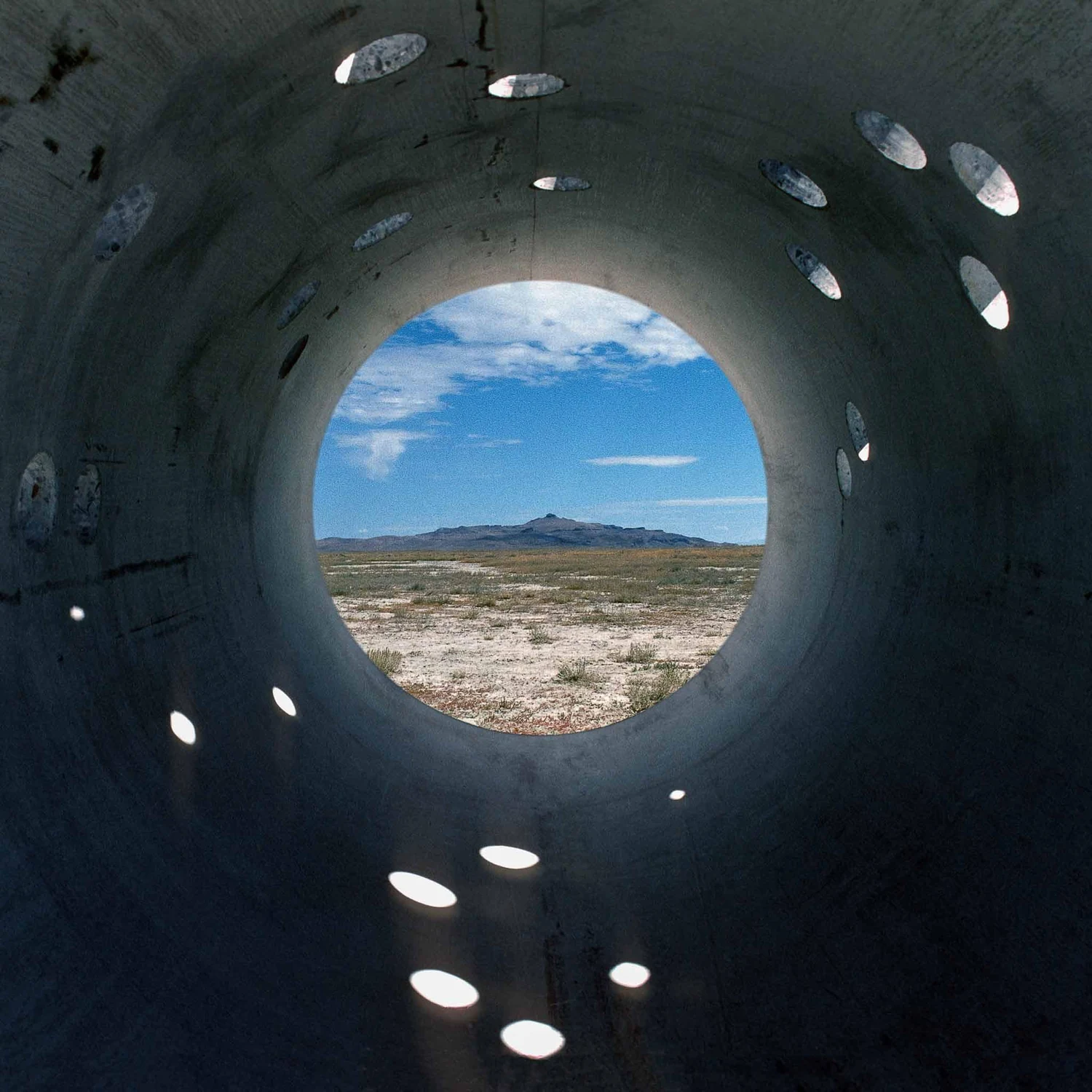
Completed in 1976, four concrete cylinders give the Utah desert a human scale. Arranged in an open X, they frame sunrise and sunset at the summer and winter solstices. Smaller openings follow the positions of stars in four constellations, casting patterns of light across the curved interiors.
“I had no desire to make a megalithic monument,” Holt wrote. The tunnels offered manageable portions of an expansive landscape, along with somewhere to escape the glare. From within one, another appears as a smaller circle against a ridge. A broad horizon acquires edges and intervals.
Before the foundations were dug, Holt waited to check the winter solstice herself, postponing construction until the ground thawed in spring. An astrophysicist had calculated the angles; Holt wanted to see the light.
Haroon Mirza: Stone Circle
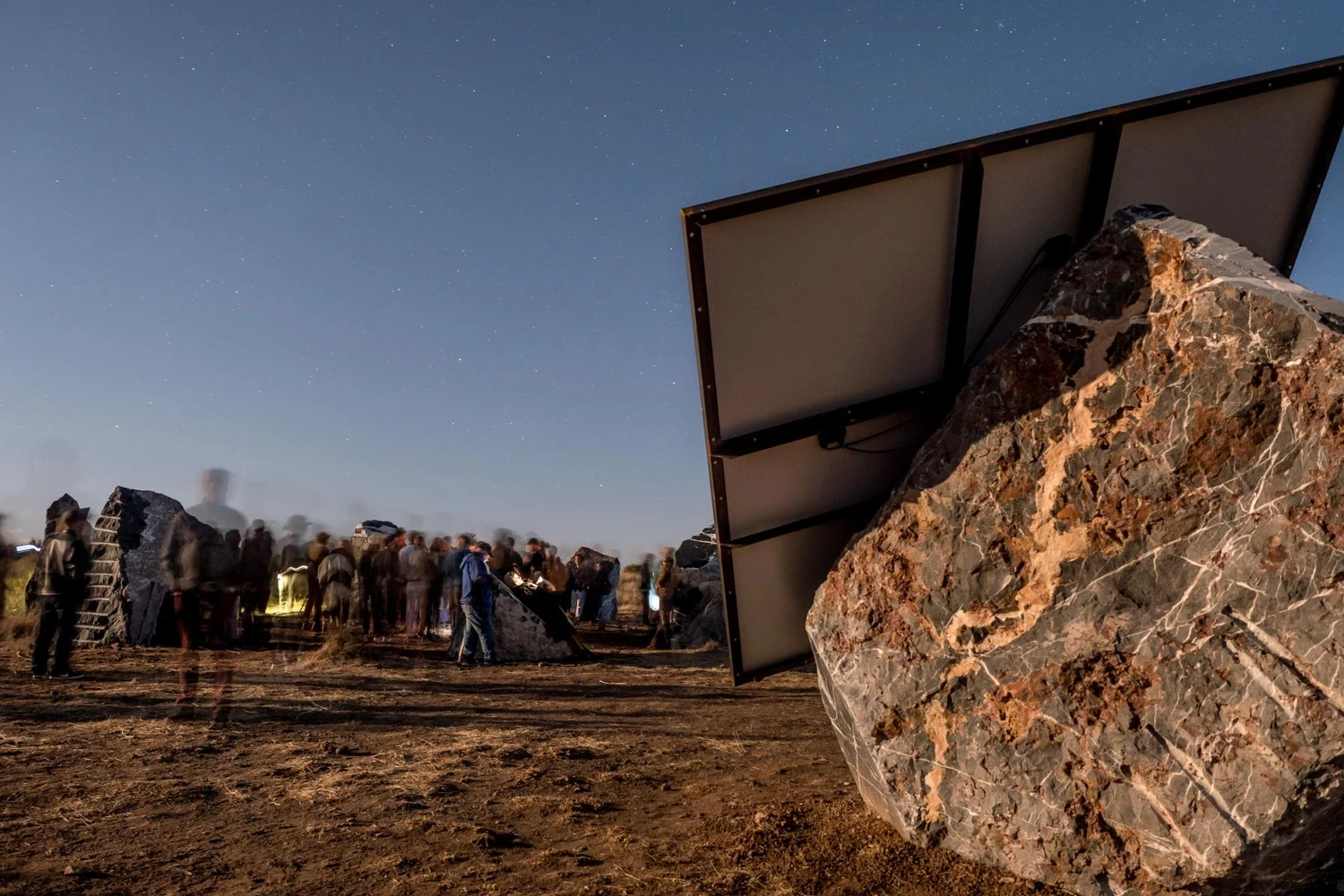
Commissioned by Ballroom Marfa in 2018, eight black marble blocks contain speakers and LEDs. A ninth holds solar panels and batteries. At the full moon, energy gathered during daylight becomes a composition of light and electronic sound.
The moon supplies the date; the sun supplies the electricity. Its power source remains visible, and knowing how it works need not diminish the pleasure of gathering around it after dark. Holt’s visitor looks through an opening towards the sun. Mirza’s waits for the energy collected from it to become sound.
The apparatus has ordinary vulnerabilities, too. Rain damaged the electronics before the first performance, and repairs took months. The circle’s celestial schedule depends on equipment exposed to the weather.
Jeremy Deller: Sacrilege
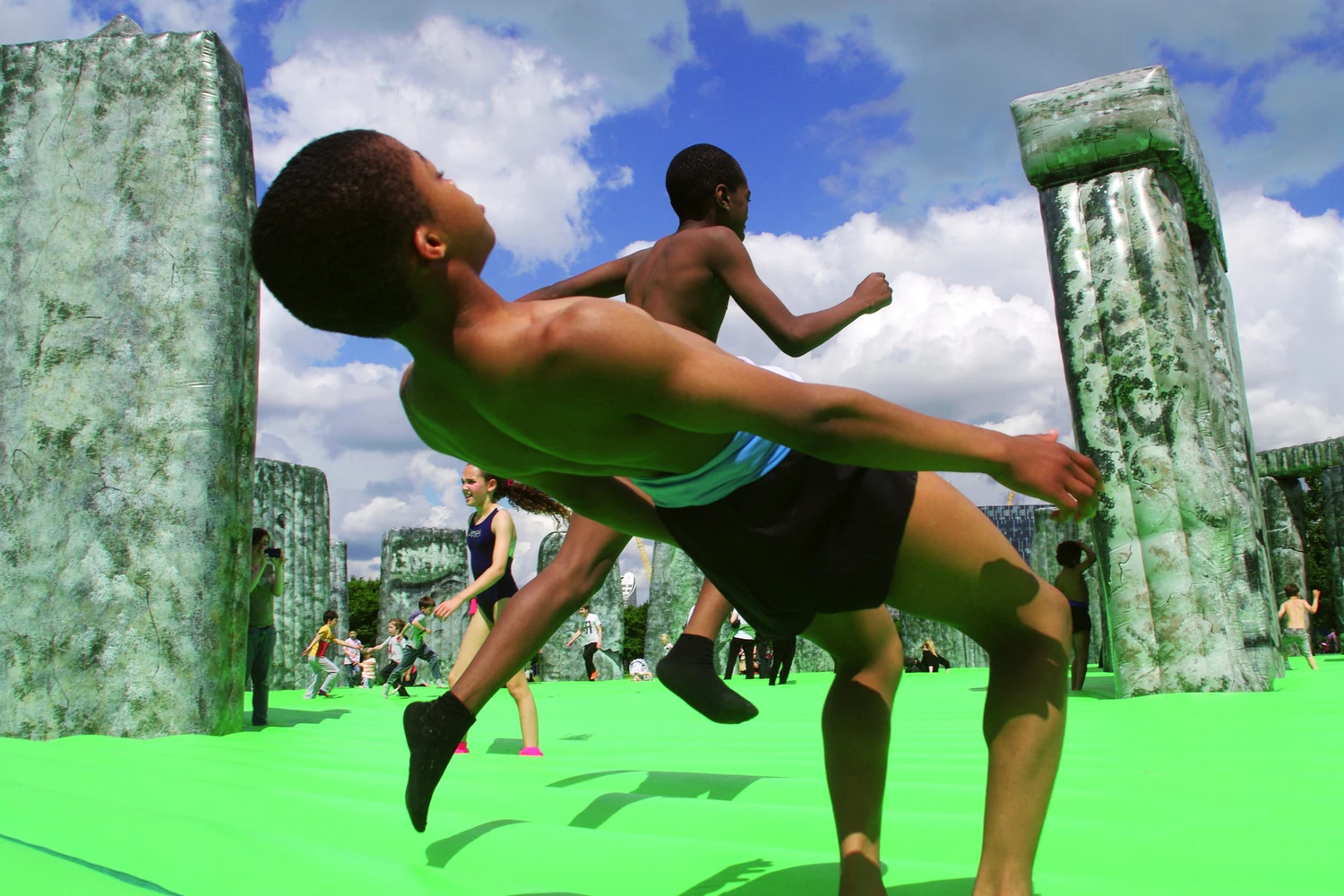
First presented at Glasgow International in 2012, Deller’s life-size inflatable Stonehenge keeps the familiar uprights and lintels while changing almost everything about how we behave around them.
Visitors take off their shoes and bounce. On its inflatable floor, other people’s movements can be felt through your feet. Something usually encountered at a distance becomes something to enter, touch, and play on.
Deller described it as a way to become reacquainted with ancient Britain “with your shoes off”. As the work travelled through parks and public places, free access was part of the commission. The invitation to use the monument was built into the work.
Matter Design: Walking Assembly
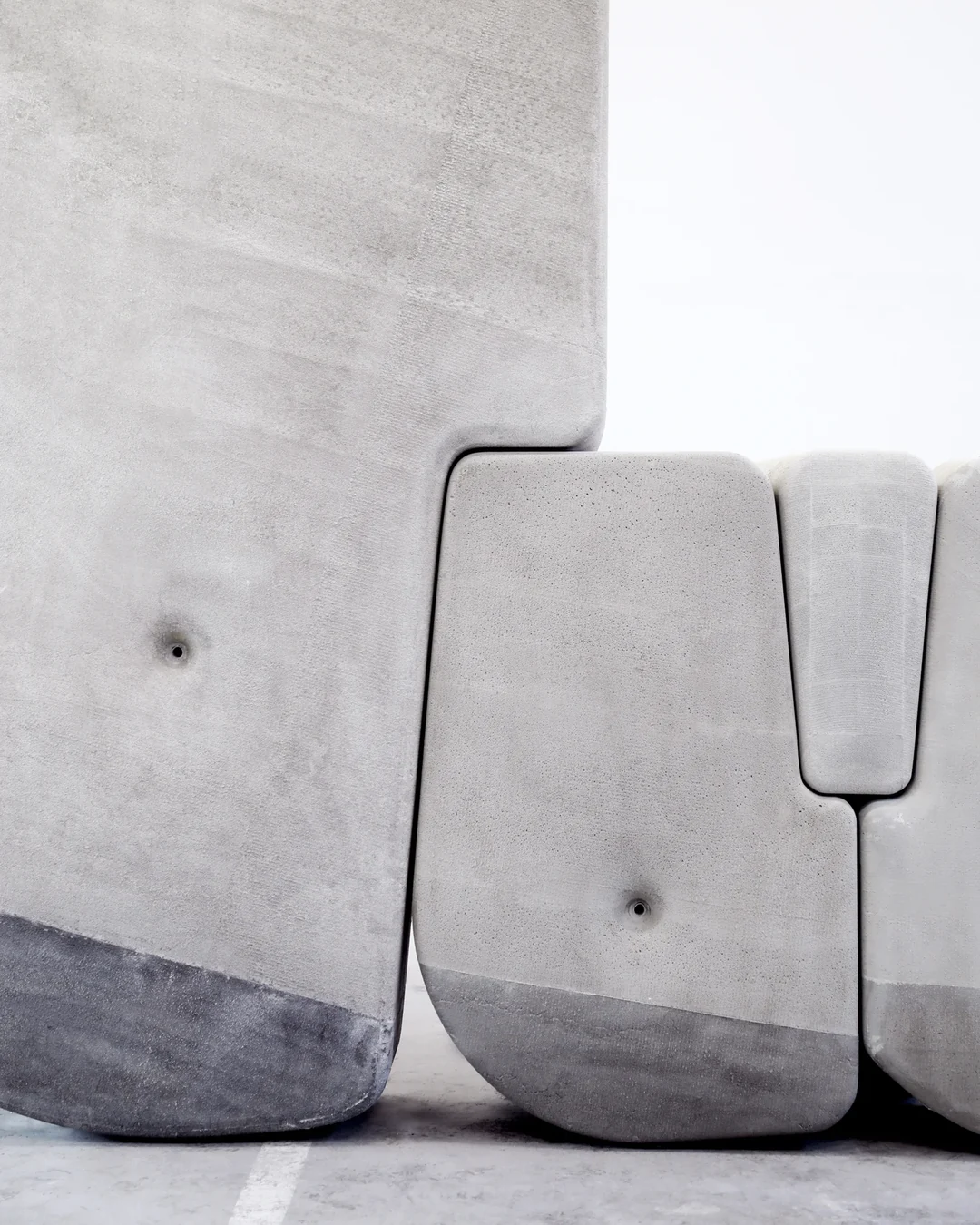
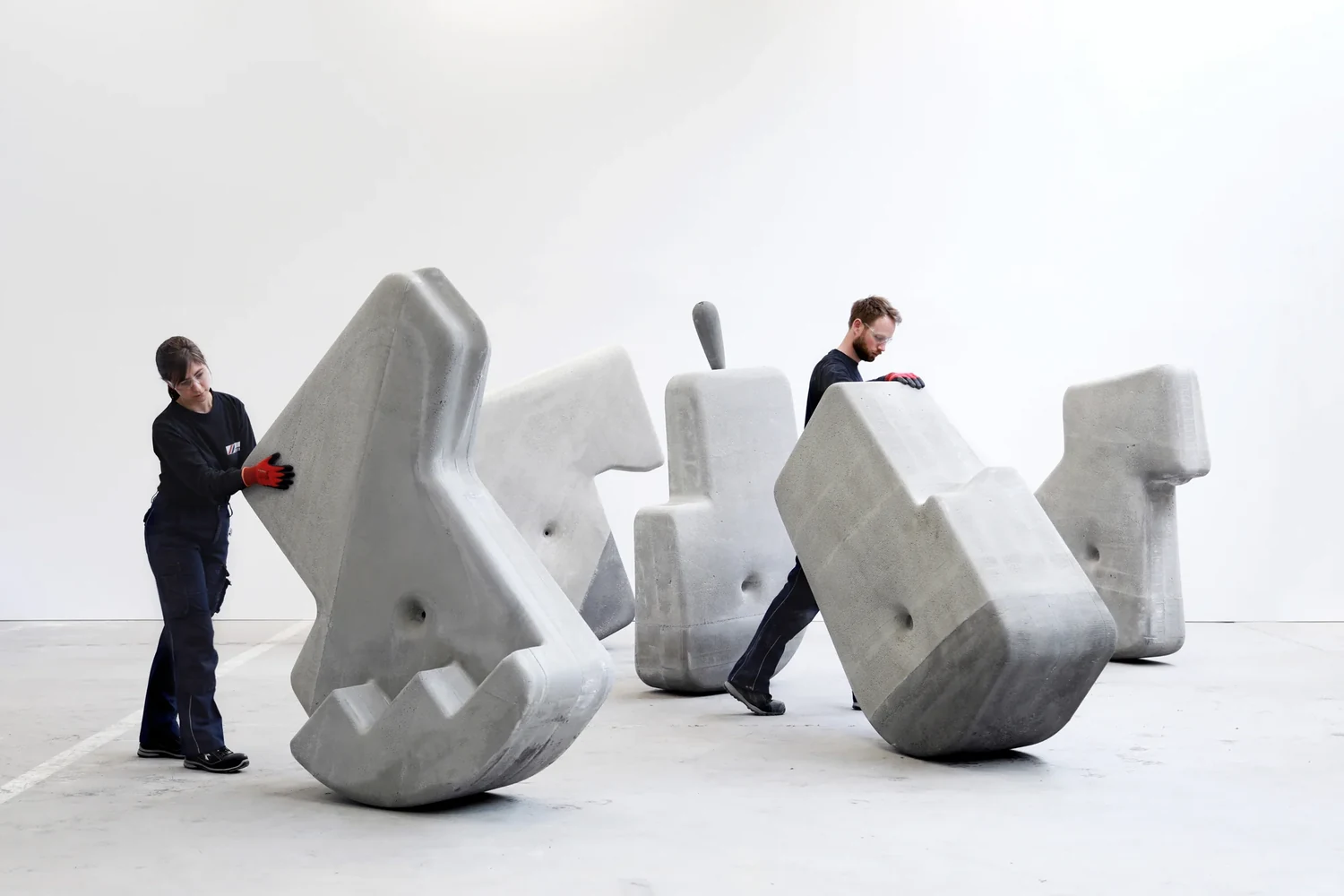
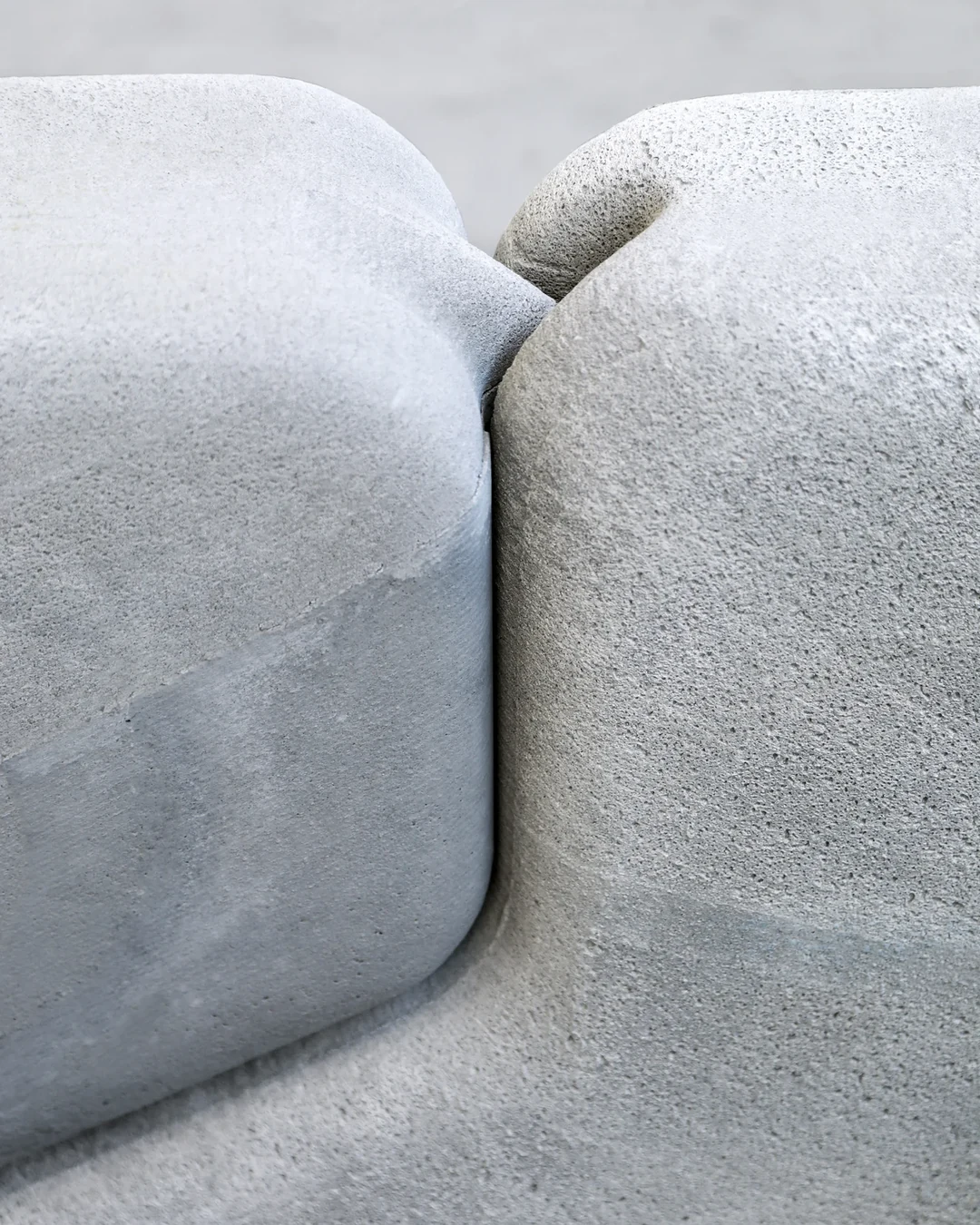
Developed with CEMEX in 2019, these enormous concrete elements can be manoeuvred by hand. Curved surfaces allow them to rock and rotate, while different densities of concrete place their centres of mass where each movement needs them. One element in the research prototype weighed more than 1.7 tonnes.
The project draws on questions about megalithic construction without claiming to explain how Stonehenge was built. Moving a block across a workshop floor does not account for an ancient stone’s journey across a landscape. Instead, the research asks what those unresolved questions might offer future architecture.
The elements can be assembled without a crane and separated again, suggesting buildings whose massive parts are designed to move and find another use. Alignment and surface wear remain challenges, but the possibility is substantial.
Watching the movement is a peculiar pleasure. The scale suggests that the concrete ought to stay where it is; the rounded base suggests otherwise. A person places their hands on it, shifts their footing, and the whole mass turns.