RIMOWA× LEHNI
From Storage to Display
A suitcase spends much of its life going nowhere. Rimowa and Swiss furniture maker Lehni have designed the Bench and Drawer for that in-between time. Both give cabin cases a place in the room, where putting them away no longer means hiding them.
The object: Bench and drawer
Once you have unpacked, the suitcase has to go somewhere. Usually, its size makes that decision for you: under a bed, above a wardrobe, at the back of a cupboard. The Bench and Drawer begin with the more generous assumption that there is room to give it a permanent place.
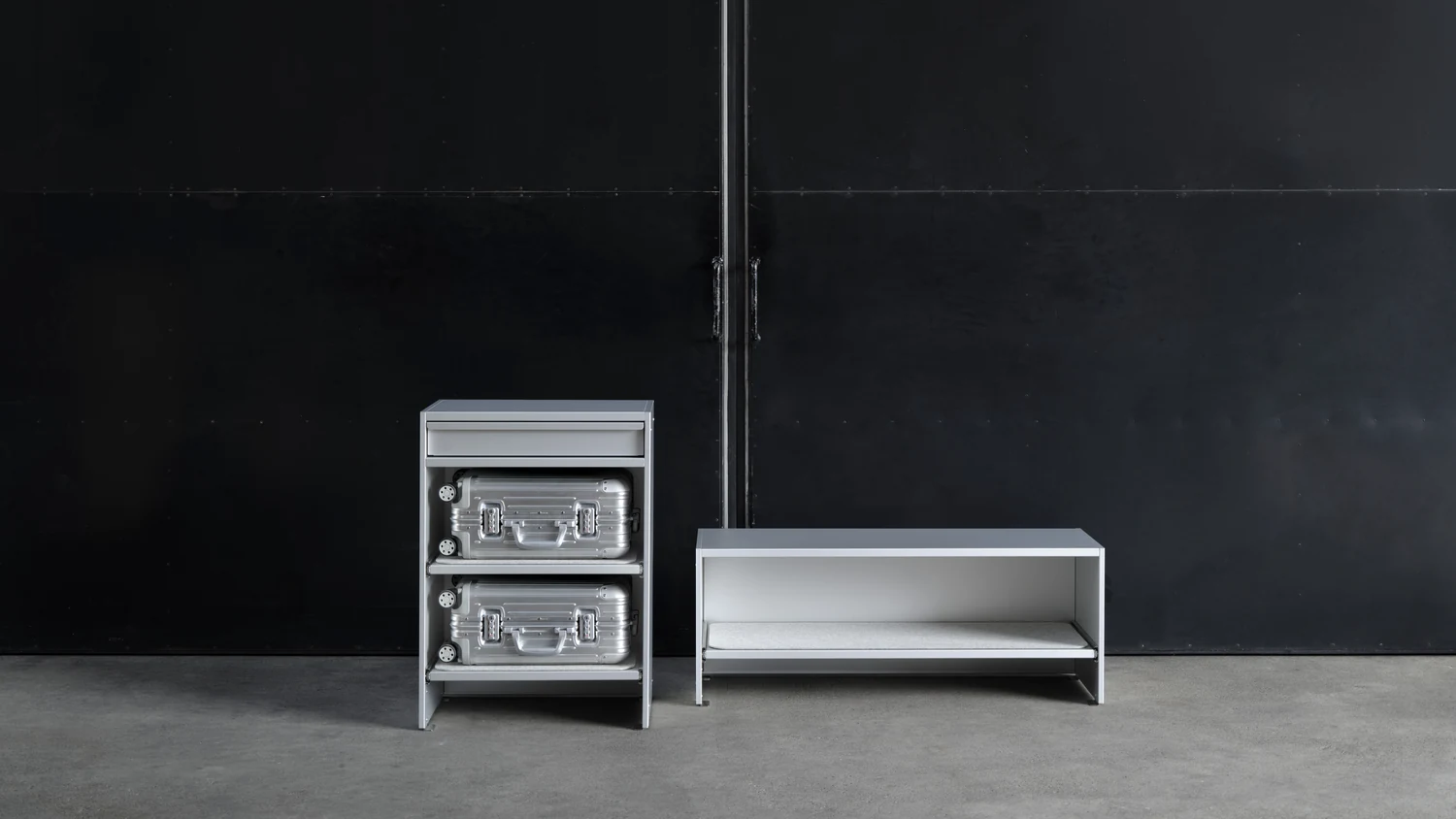
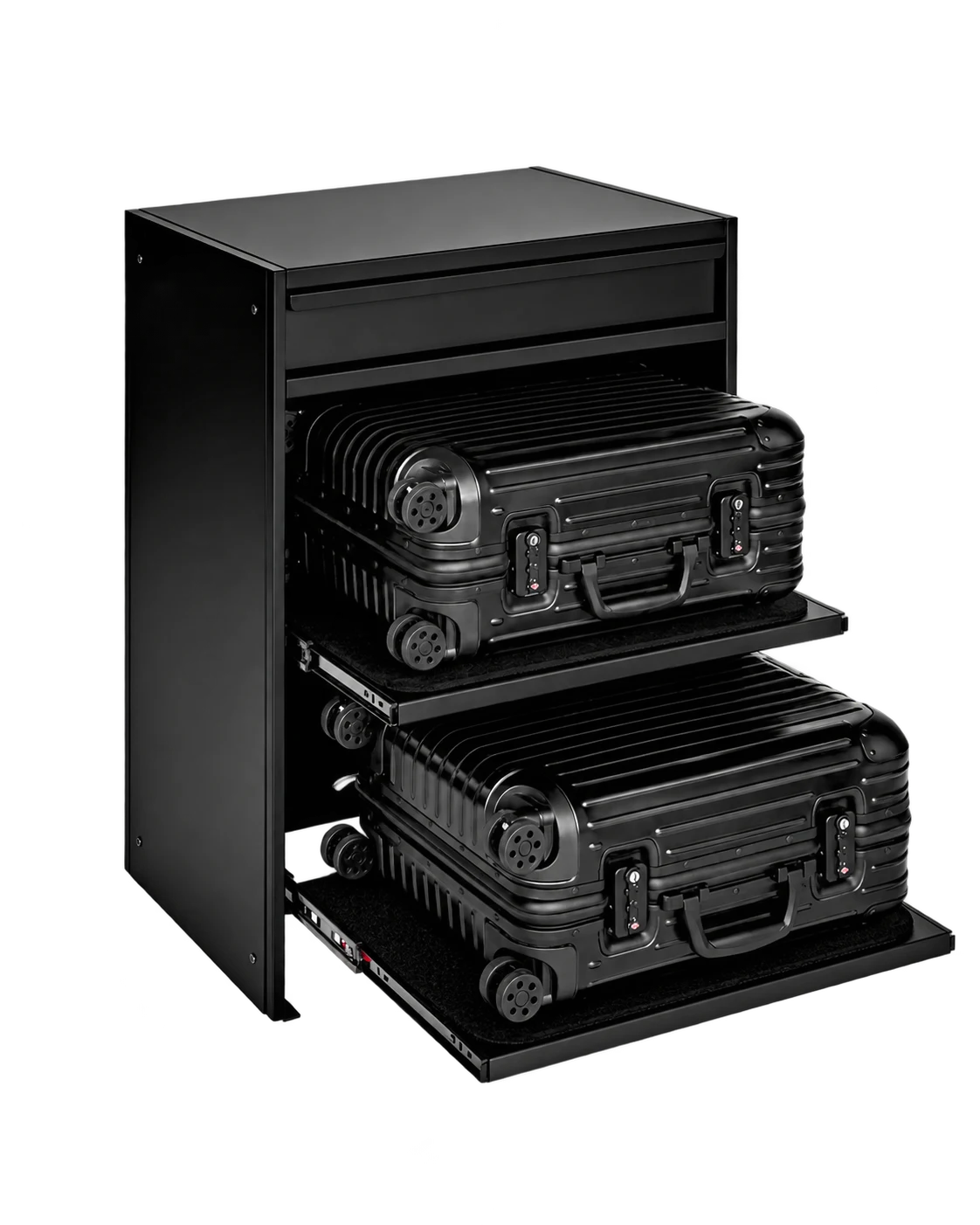
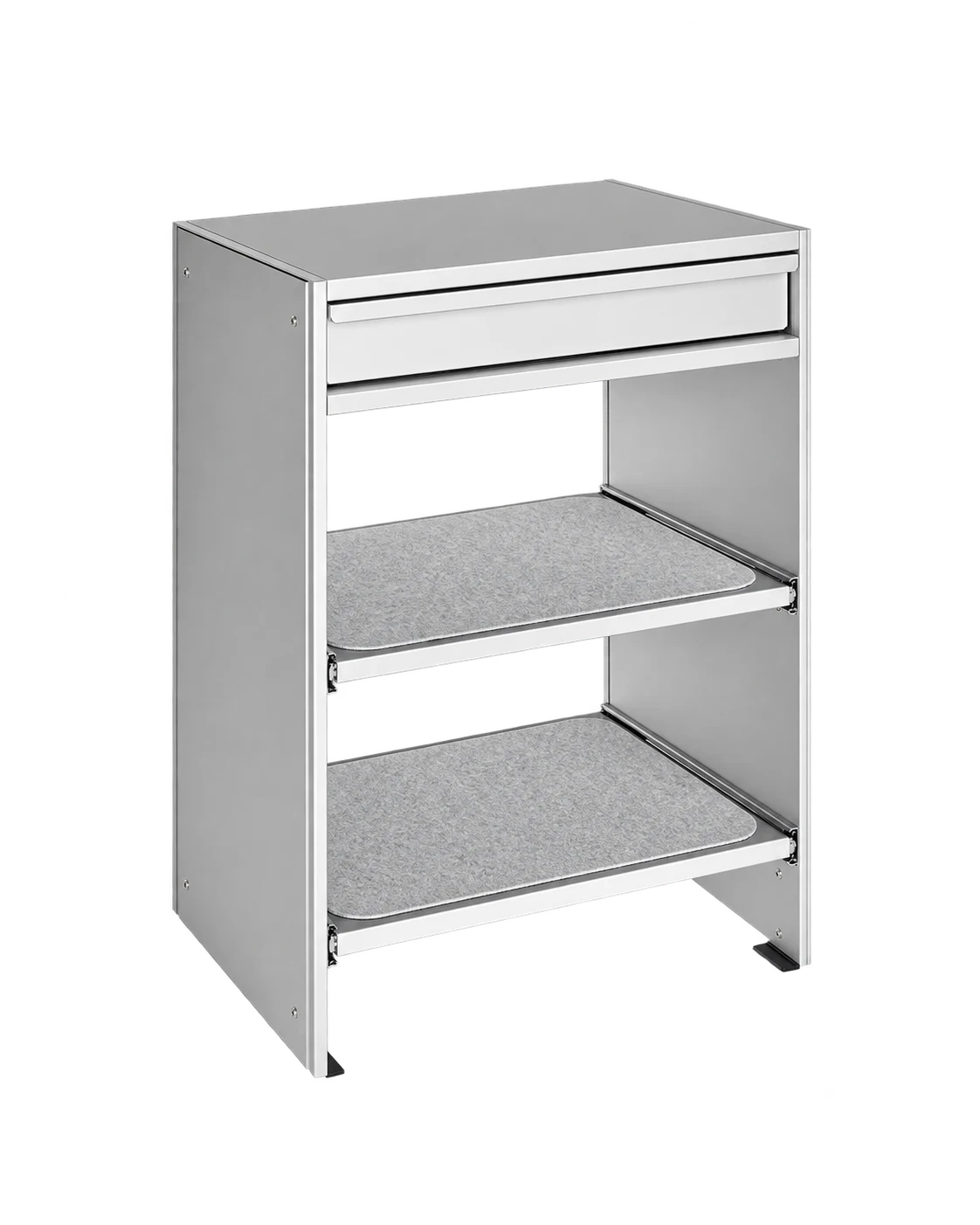
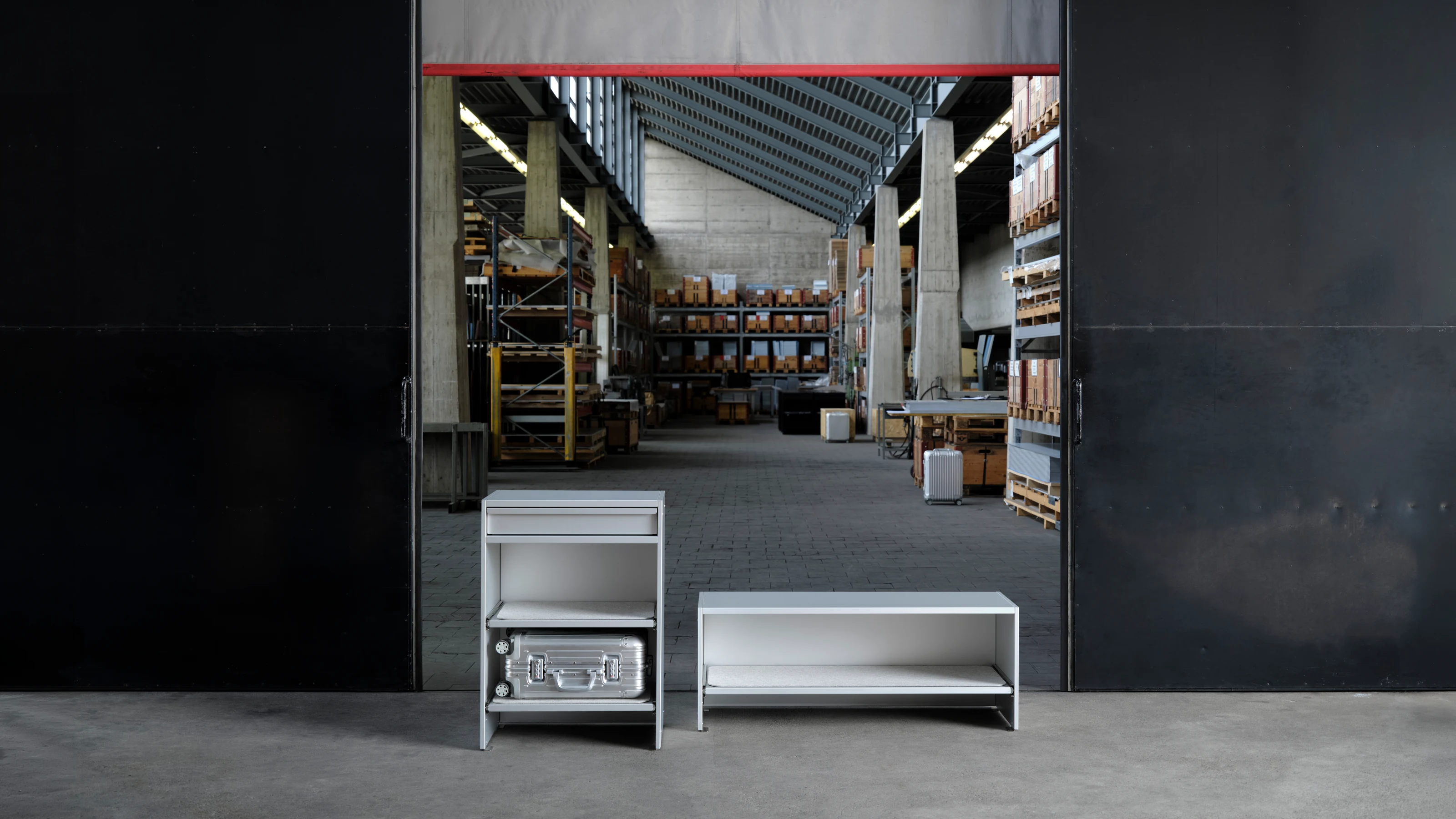
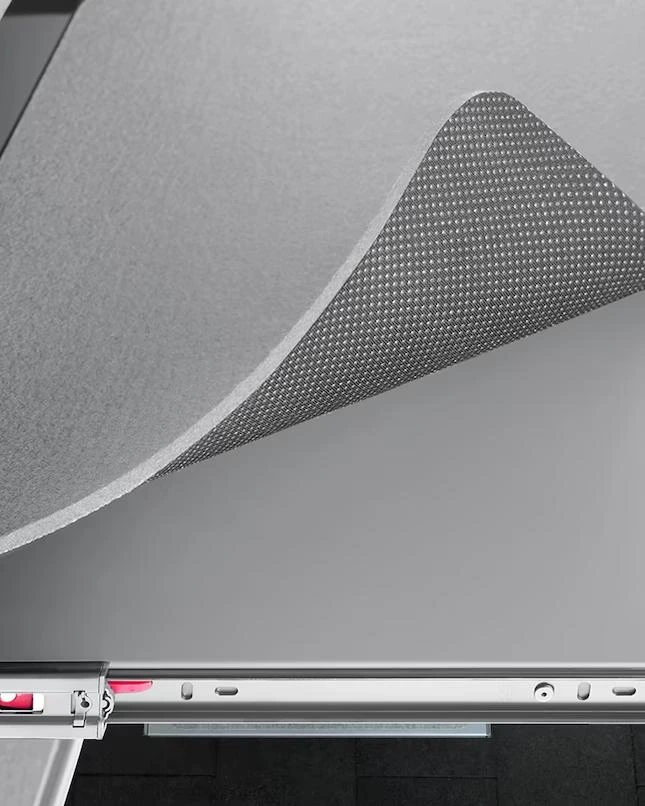
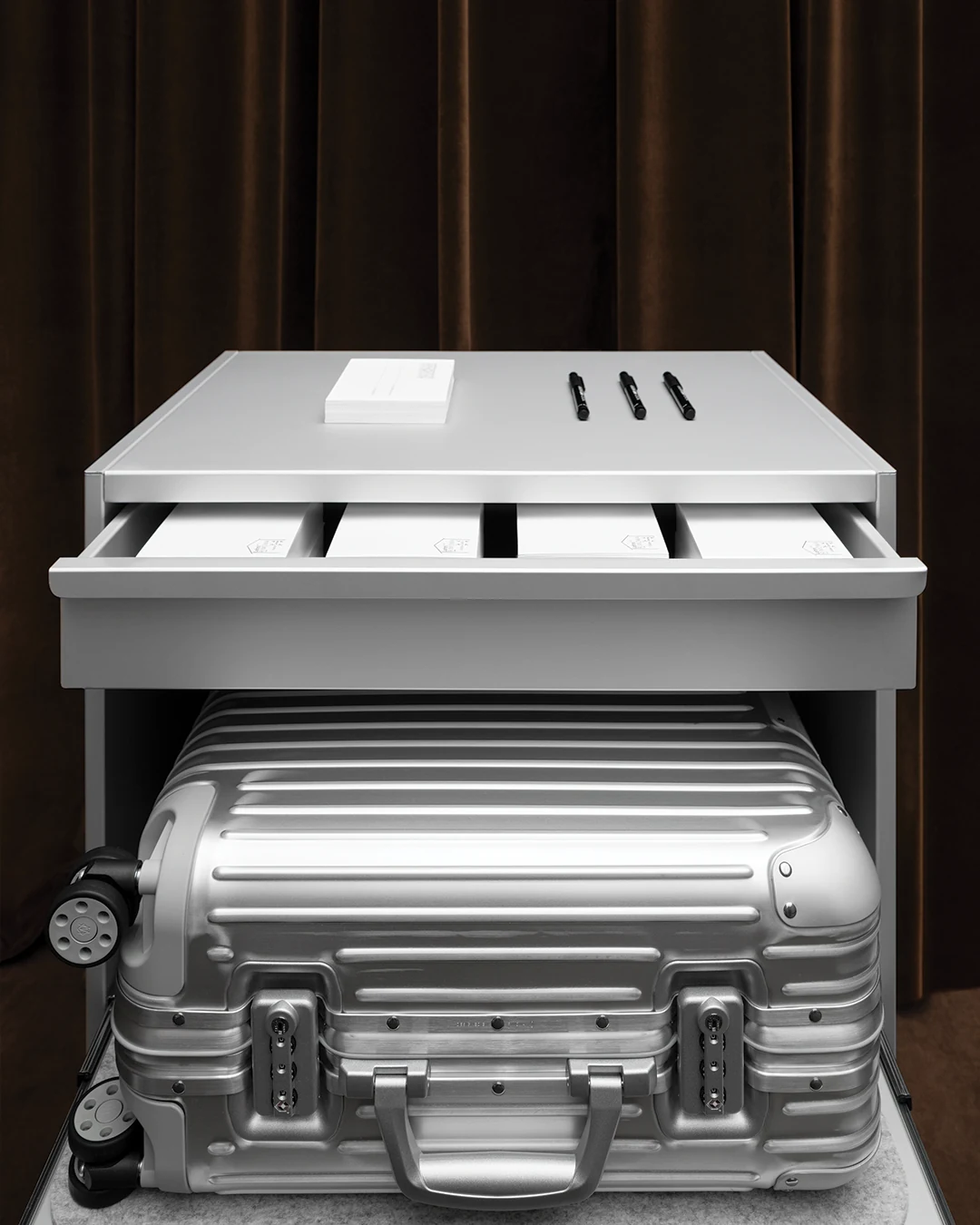
The two pieces organise that space differently. The Bench holds up to two cabin cases side by side, creating a low, horizontal arrangement. The Drawer stacks them and adds a closed compartment for smaller belongings. Both come in silver or black anodised aluminium, with felt mats protecting the surfaces on which the cases rest. They are designed to accommodate cabin cases across Rimowa’s collections.
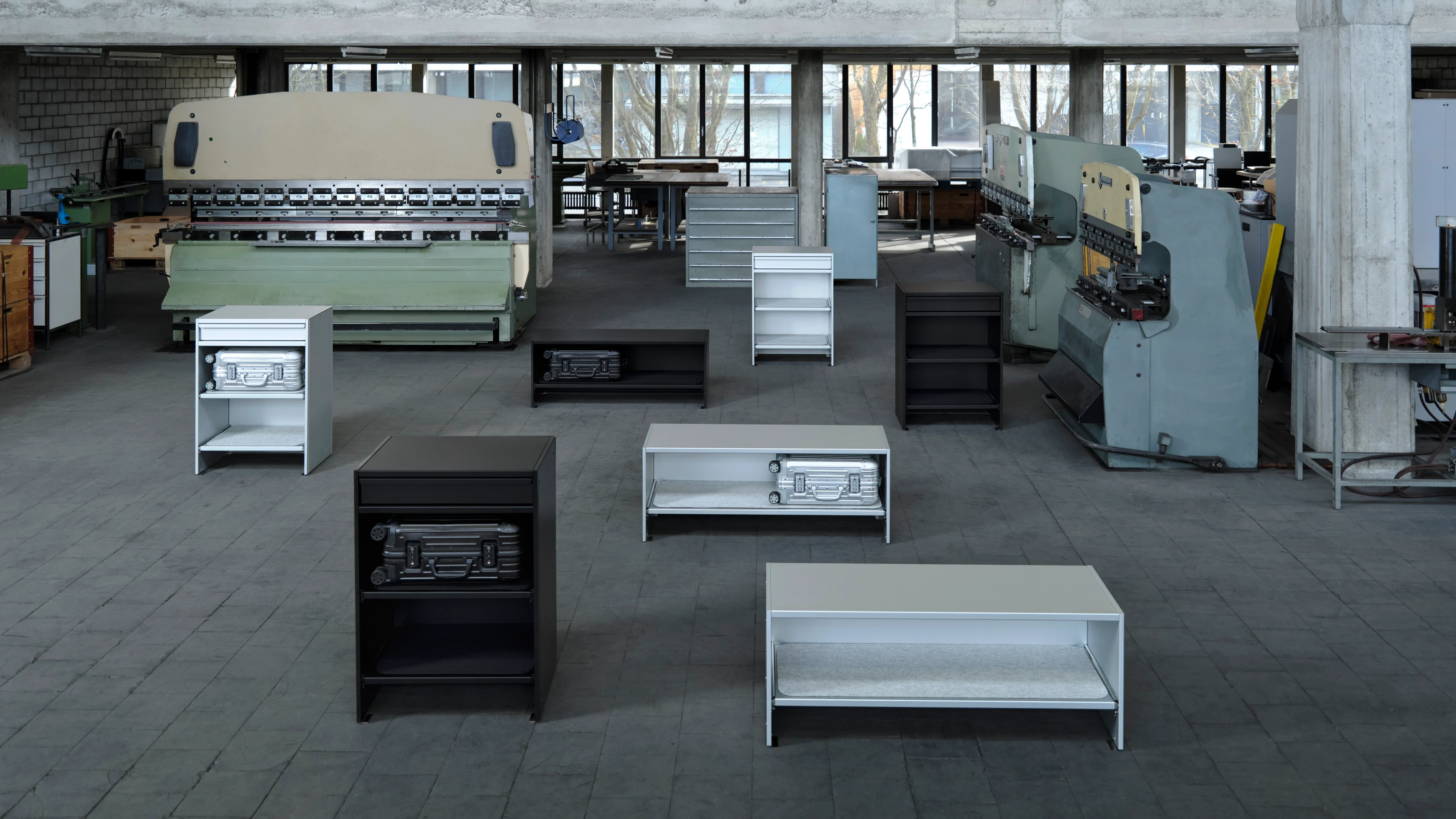
In the campaign’s silver pairings, the furniture provides a quiet outline around the busier luggage. Flat planes and straight edges frame the cases’ grooves, rounded corners, handles and wheels. The contrast gives the suitcase more visual presence while making the two objects read as a set.
The felt is a small but revealing detail. A case built to move through airports receives a soft landing at home. Protection becomes part of the display: the furniture treats the luggage as something worth looking after even when it is empty.
That proposition asks something of the room as well as the owner. The footprint remains occupied while the suitcase is travelling. In exchange, the furniture makes returning it to its place a deliberate act. The project’s appeal rests on how much pleasure that arrangement gives you.
The material: A shared material
Aluminium makes the partnership immediately legible, but Lehni brings a particular history of working with it. Andreas Christen’s Aluminium Shelf was first produced for the Swiss National Exhibition in 1964 and entered the market in 1970. Its strength comes from precisely bent sheet metal and a rear cross-brace; a limited set of components allows many configurations, with additions including drawers, doors and pull-out shelves.
That history matters because the underlying system leaves its eventual contents open to change. Books, files, clothing and objects can occupy the same structure at different points in its life. Rimowa describes the collaboration as the first adaptation of Lehni’s modular system specifically for suitcase storage.
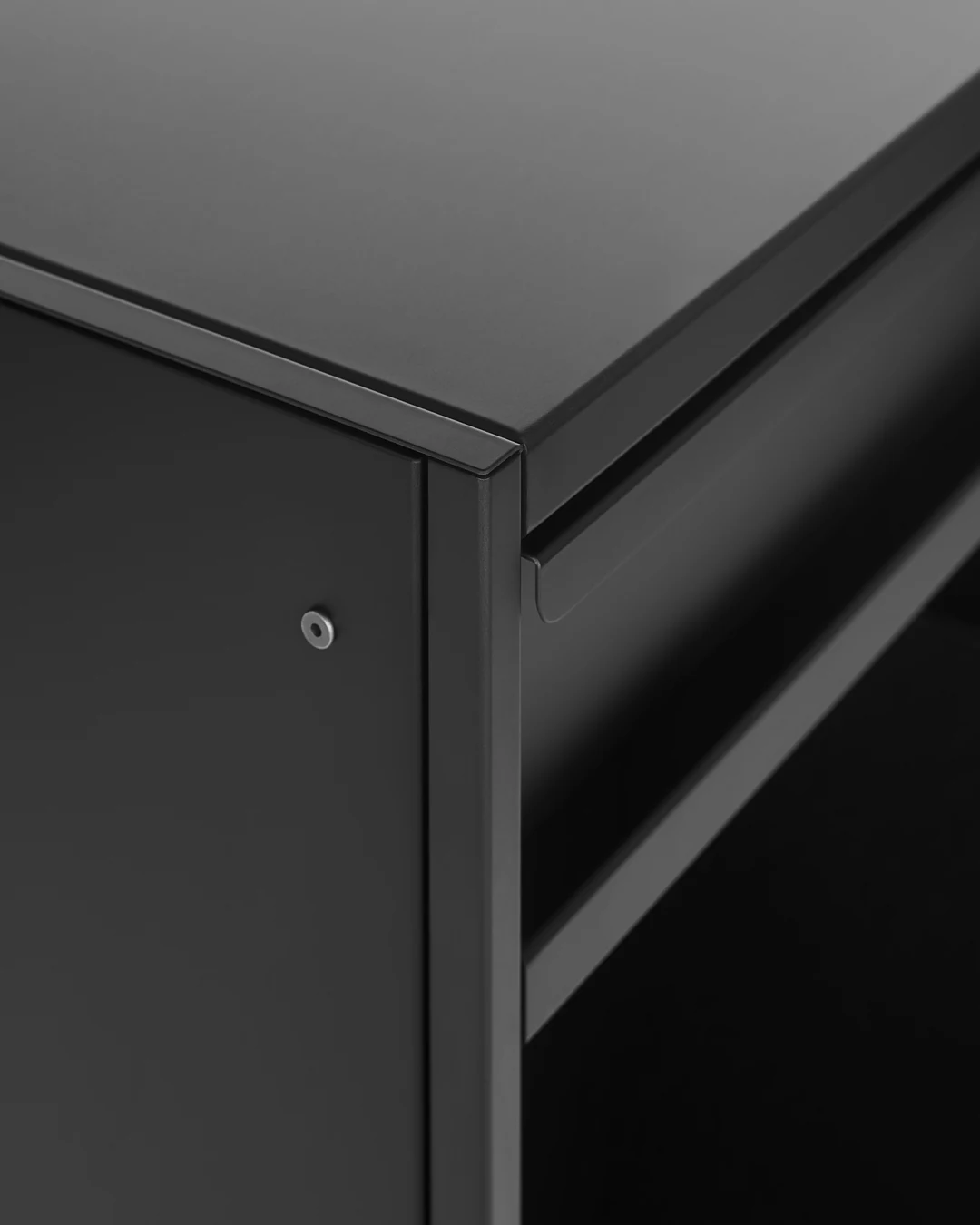
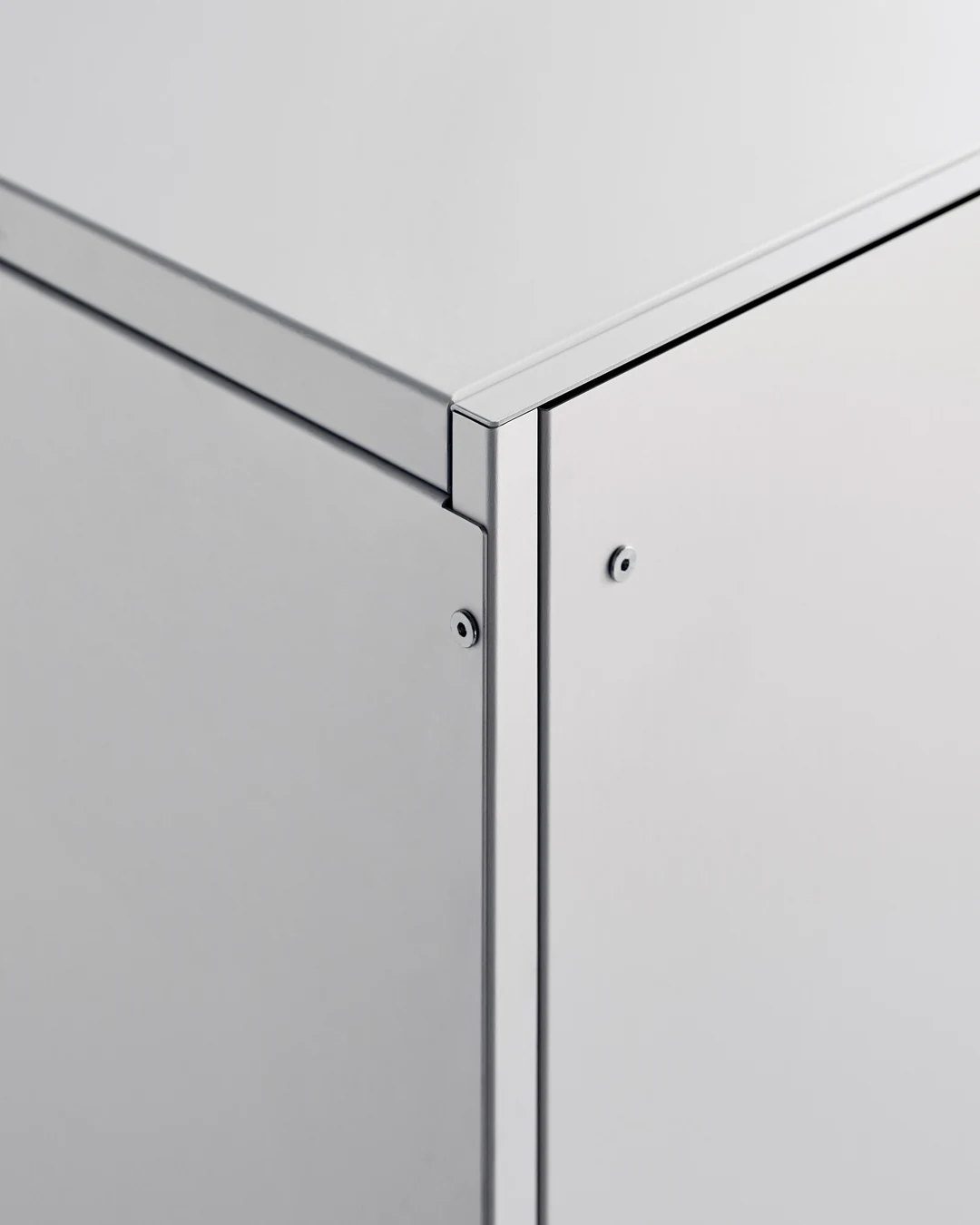
The detail photographs make the connection tangible. Folded edges meet at the corners; fixings remain visible on the side panels. In black, the folds register as narrow highlights against dark planes. In silver, the surfaces and their junctions are easier to read together. The construction supplies much of the visual interest.
The adaptation introduces a useful tension. The closer the furniture fits its intended contents, the more complete the pairing looks. Yet that specificity also narrows the invitation made by the original shelving system. Other things could occupy these shelves, but the campaign gives one arrangement a privileged status.
Remove the cases and the open compartments become more conspicuous. The suitcase supplies texture, volume and a recognisable silhouette. It is effectively one of the elements with which the furniture’s appearance has been composed.
Making the image
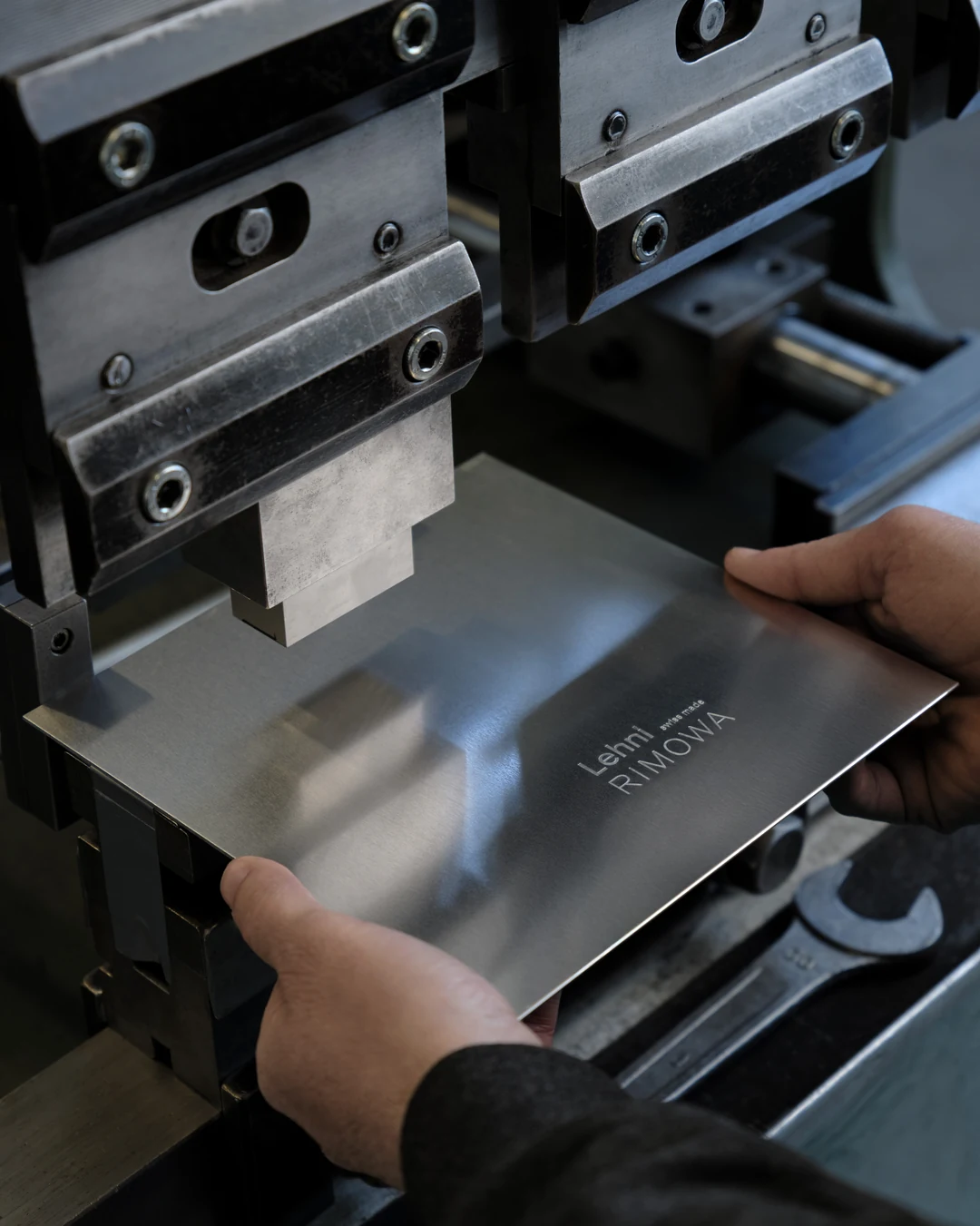
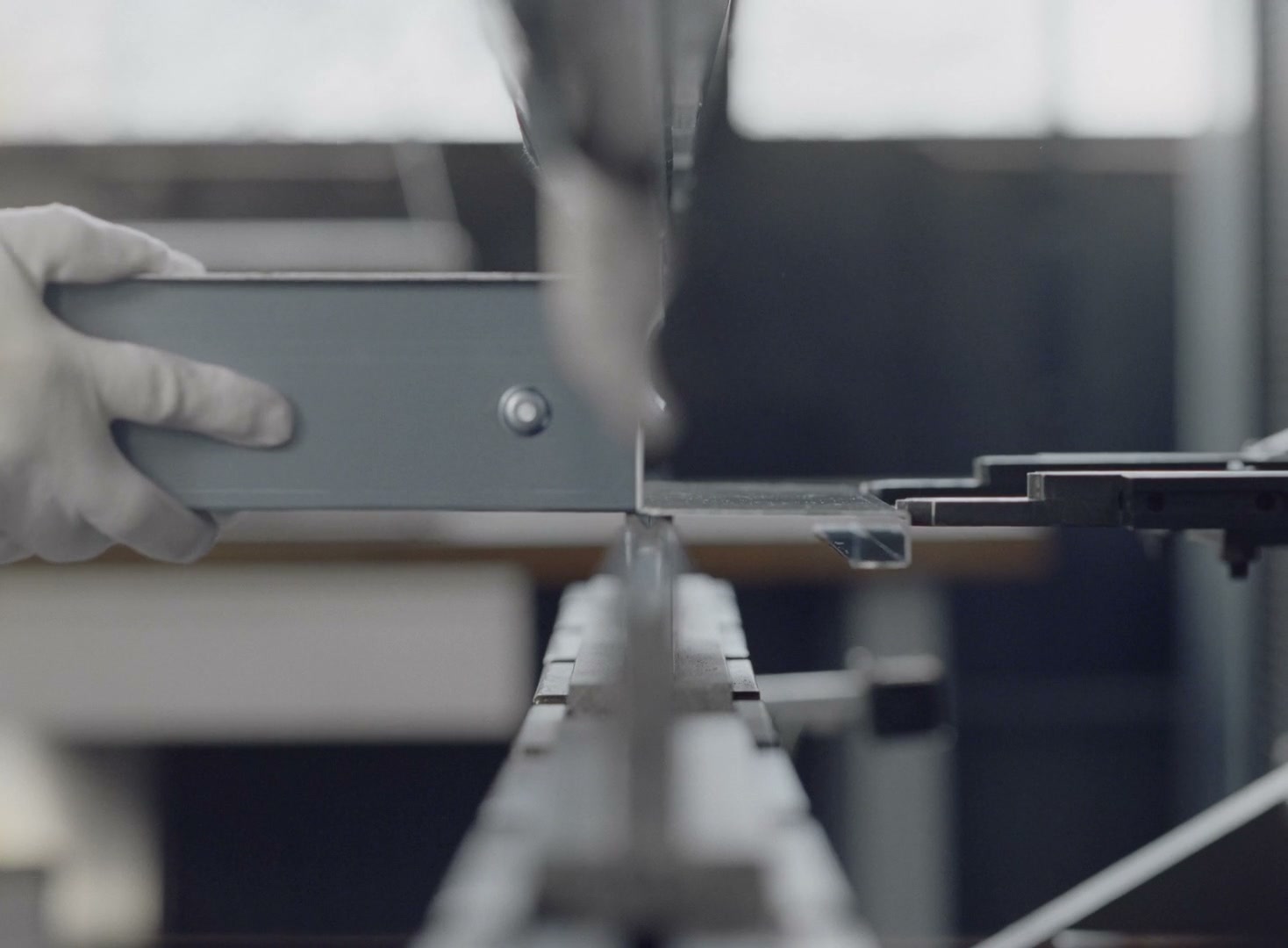
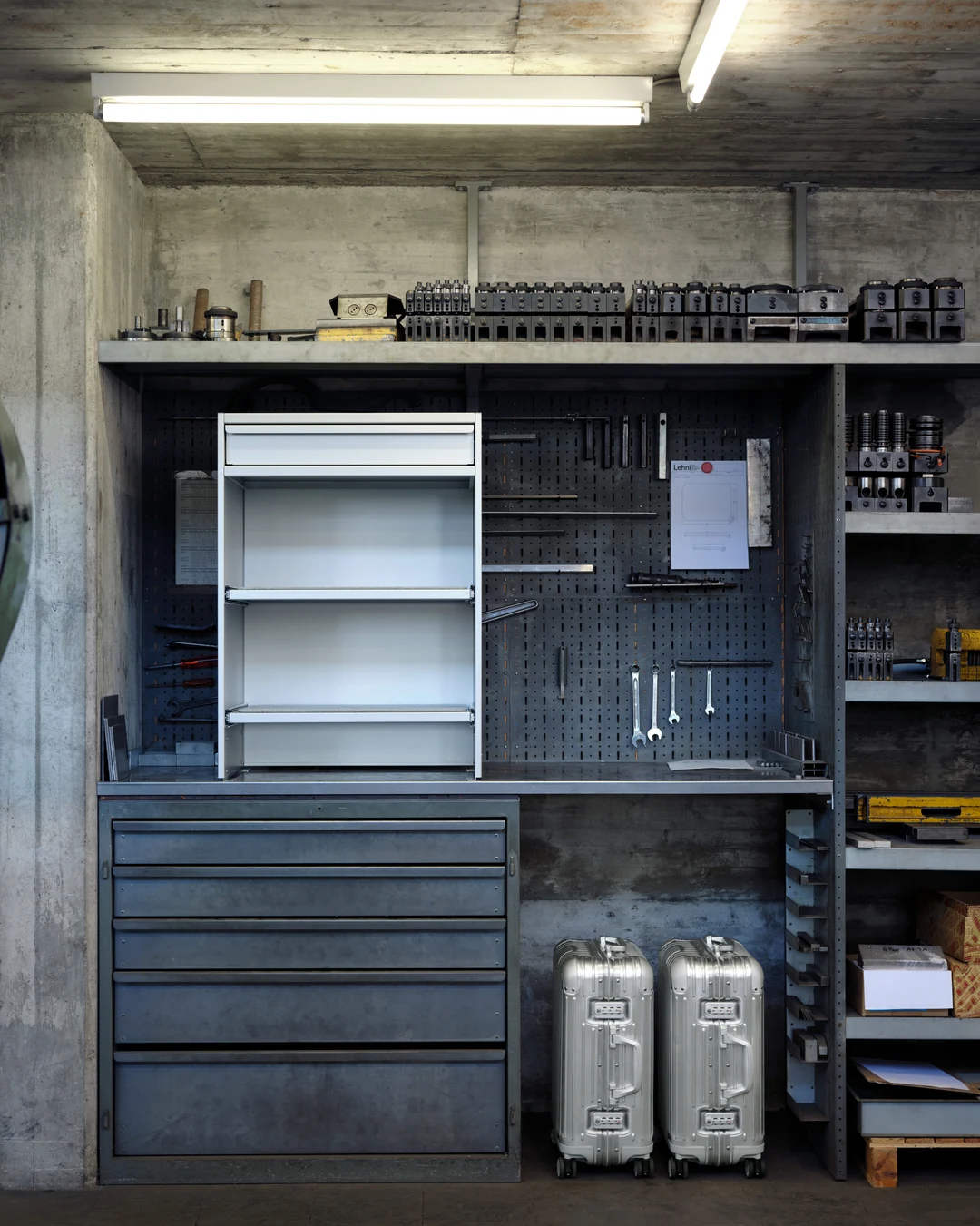
Federico Torra’s campaign photographs place the collection among the machinery of Lehni’s factory. The setting gives the clean aluminium surfaces something to work against: equipment, workbenches and the accumulated detail of a place where things are made. The finished pieces appear unusually composed within that environment.
This is a persuasive choice. A domestic interior would immediately attach the furniture to a particular way of living. The workshop establishes a different relationship first, locating the objects within a material practice. It gives the viewer a reason to connect the appearance of a folded corner with the work required to produce it.
One production image makes that argument particularly directly. Hands guide a sheet beneath a machine, with the Lehni and Rimowa names already visible on the metal. Manufacture and brand identity occupy the same small area of the photograph. The partnership can be read in the material before the complete object appears.
The accompanying film, directed and edited by Burak Erinmez, with cinematography by Tuomas Nurmi and production by Farbfilm, carries the factory setting into moving image.
Together, the stills and film make a strong case for looking closely at the objects. They provide less access to the decisions behind them. The published material leaves the development of the proportions, the division of design responsibilities and the alternatives considered largely unexplained. For a collaboration presented through its making, those would be the most revealing parts of the story to hear next.
The film could not be played. Please reload the page and try again.
The visitor centre
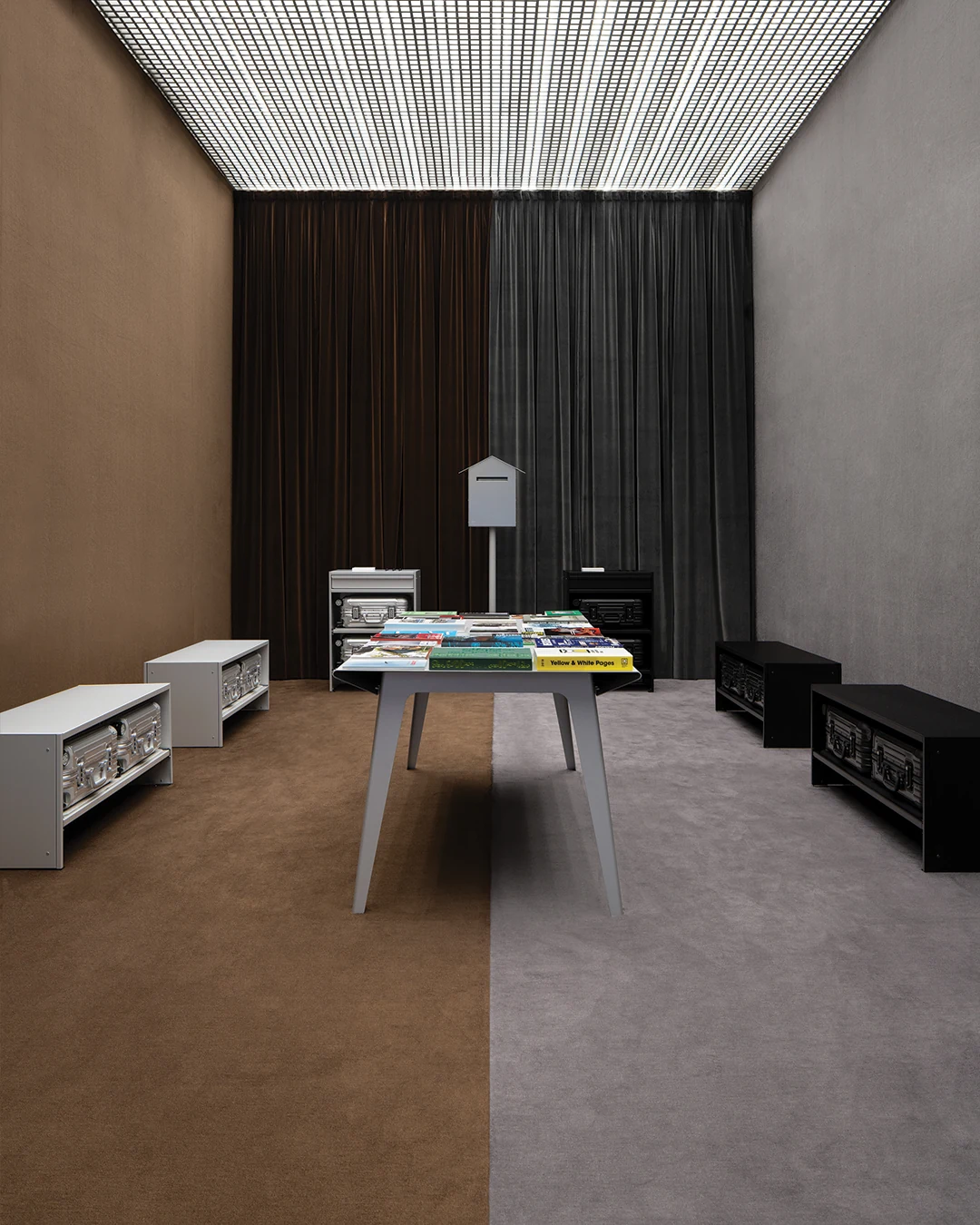
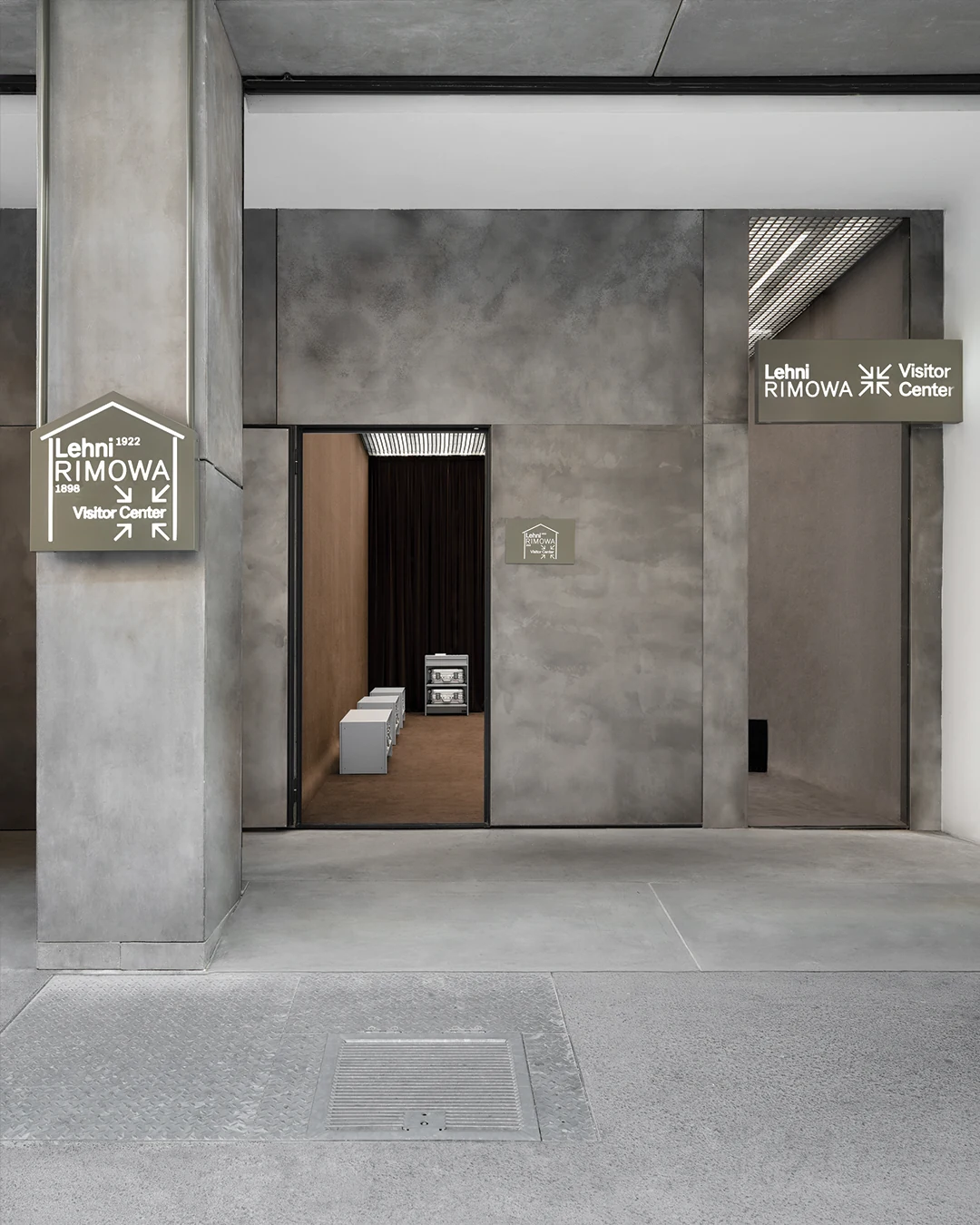
The Milan presentation gave the collection another setting. Open during Design Week in April 2026, the visitor centre combined the furniture with books selected by Innen Publishing and a station for sending postcards from Milan.
In the installation photographs, the room is divided into warm brown and cool grey halves. Silver and black furniture sit around its edges, while a table of books occupies the centre. The colour split makes the two finishes part of the architecture of the display.
The books give the room a visible activity beyond inspecting the products. Their varied covers interrupt the controlled palette; the postcard station connects the stationary cases to correspondence and travel. These are modest additions, but they help explain how luggage might remain present in a room without being in use.
The factory and visitor centre therefore supply complementary arguments. One places the collection among the means of production. The other surrounds it with reading, looking and the anticipation of journeys. Between them, the furniture acquires both a place of origin and a proposed cultural life.
Reflection: In perspective
The collaboration is strongest in the relationship it establishes between the furniture and the suitcase. The restrained frames leave the luggage’s familiar details visible, and the shared material makes the pairing convincing without requiring the two objects to look identical. Lehni’s contribution can be seen in the folds, junctions and proportions.
Its more limited achievement is as a proposal for domestic storage. The central decision, to dedicate open space to a suitcase, has already been made before these pieces become useful. Their precision improves that arrangement, but it cannot make the same arrangement desirable in every home. The furniture is addressing an attachment as much as a practical inconvenience.
There is nothing inherently trivial about that. Homes are full of furniture chosen to give particular possessions a place: records, books, ceramics, collections of almost anything. The distinction here is how explicitly the supporting furniture is tied to the identity of what it holds. It asks the owner to give that attachment a lasting place in the room.
The photography and exhibition make this commitment seem natural. The factory establishes material credibility; the visitor centre places the cases alongside books and everyday rituals. Both help the furniture carry the suitcase from travel equipment into the field of things we choose to keep around us.
That coherence deserves recognition. It also sets the terms on which the project should be judged. The Bench and Drawer offer a carefully resolved way to display an object whose owner already values its appearance. Their strongest claim is the pleasure and clarity of that relationship. Presenting them as a broader answer to storage gives them a job they have little reason to fulfil.
The result is an accomplished, deliberately narrow project. It shows how effectively product design, photography and spatial presentation can work together to change the status of an existing possession. Rimowa gives the suitcase somewhere to stand; Lehni gives that gesture enough formal conviction to belong in the room.
Credits: Behind the work
Product
- manufacture
- Lehni
- campaign photography
- Federico Torra
- image production
- Profiler.world
Factory film
- client
- Rimowa
- collaborations & special projects manager
- Marin Mornieux
- agency
- Profiler.world
- creative direction
- Sebastian Vargas
- production company
- Farbfilm Studio
- executive producer
- Flo Brunner
- director and editor
- Burak Erinmez
- director of photography
- Tuomas Nurmi
- production coordinator
- Alina Graber
- production assistant
- Michel Elsasser
- first assistant camera
- Bruno Stadler
- second assistant camera
- Nino Ubezio
- key gaffer
- Lino Kalt
- spark
- Giacumin Cattelan
- key grip
- Nino Burkart
- grip
- Marco Bauer
- music composer
- Cheng Zhuang
- colourist
- Fabio Gasser / Epilogue Studio
- visual effects
- Slavko Gavric / Mose Management
Visitor centre
- book selection
- Innen Publishing
- venue
- Via Achille Maiocchi 10, Milan